
Will COVID-19 Cause Deflation to Show Up?

On June 10, 2020, the Department of Labor released CPI numbers for May and there was a chorus singing deflationary tunes for the rest of the week. Will the chorus get louder over the coming months or lose its voice in the heat of the summer? The U.S. Bureau of Labor Statistics reported that: The Consumer Price Index for All Urban Consumers declined 0.1% in May on a seasonally adjusted basis after falling 0.8% in April Over the last 12 months, the all items index increased 0.1% before seasonal adjustment Further, it was reported that: “Declines in the indexes for motor vehicle insurance, energy, and apparel more than offset increases in food and shelter indexes to result in the monthly decrease in the seasonally adjusted all items index. The gasoline index declined 3.5 percent in May, leading to a 1.8-percent decline in the energy index. The food index, in contrast, increased 0.7 percent in May as the index for food at home rose 1.0 percent. The index for all items less food and energy fell 0.1 percent in May, its third consecutive monthly decline. This is the first time this index has ever declined in three consecutive months. Along with motor vehicle insurance and apparel, the indexes for airline fares and used cars and trucks declined in May. The indexes for shelter, recreation, medical care, household furnishings and operations, and new vehicles all increased.” This data adds another worry to any economic recovery – whether it’s U-shaped, V-shaped or doesn’t take any shape at all – as deflation is now a real possibility. In fact, this is the first time in over 60 years that core CPI has dropped for

Read More »

IRS Offers Relief to Retirement Plan Participants

On June 19, 2020, the Internal Revenue Service announced new guidelines to help those affected by COVID-19 gain more access to retirement plan distributions and loans. The IRS expanded the categories of those eligible, called qualified individuals, and increased the dollar limit on loans to $100,000. The CARES Act In late March of 2020, the $2 trillion Coronavirus Aid, Relief, and Economic Security Act – the CARES Act – was passed by Congress and signed by the President.  In addition to providing direct assistance to individuals, families and small businesses, the CARES Act allows for COVID-19-related distributions of up to $100,000 from eligible retirement plans, including IRAs, between January 1st and December 30th of 2020. These distributions will not be subjected to the 10% early withdrawal penalty. In addition, a COVID-19-related distribution can be included in income in equal installments over a three-year period and one has three years to repay and undo the tax consequence. There are also provisions of the CARES Act that allow for retirement plans to relax rules for loan amounts and repayment terms, including the suspension of loan repayments that are due from March 27th through December 30th. Further, dollar amount on loans made between March 27th and September 22nd is increased to $100,000, up from $50,000. Expanding the Qualification Criteria The definition of those who qualify under the CARES Act was also expanded by the IRS. As copied directly from Notice 2020-50, a qualified individual is anyone who: Is diagnosed, or whose spouse or dependent is diagnosed, with the virus SARS-CoV-2 or the coronavirus disease 2019 (collectively, “COVID-19”) by a test approved by the Centers for Disease Control and Prevention (including a test authorized under the Federal Food, Drug,

Read More »

Saving For College

There’s no denying the benefits of a college education: the ability to compete in today’s job market, increased earning power, and expanded horizons. But these advantages come at a price. And yet, year after year, thousands of students graduate from college. So, how do they do it? Many families finance a college education with help from student loans and other types of financial aid such as grants and work-study, private loans, current income, gifts from grandparents, and other creative cost-cutting measures. But savings are the cornerstone of any successful college financing plan. College costs keep climbing It’s important to start a college fund as soon as possible, because next to buying a home, a college education might be the biggest purchase you ever make. According to the College Board, for the 2019-2020 school year, the average cost of one year at a four-year public college for in-state students is $26,590, while the average cost for one year at a four-year private college is $53,980. Many private colleges cost substantially more.   Though no one can predict exactly what college might cost in 5, 10, or 15 years, annual price increases in the range of 3% to 5% would certainly be in keeping with historical trends.   This chart can give you an idea of what future costs might be, based on the most recent cost data and an average annual college inflation rate of 5%. (Source: College Board, Trends in College Pricing 2019)     Tip: Even though college costs are high, don’t worry about saving 100% of the total. Many families save only a portion of the projected costs — a good rule of thumb is 50% — and then

Read More »

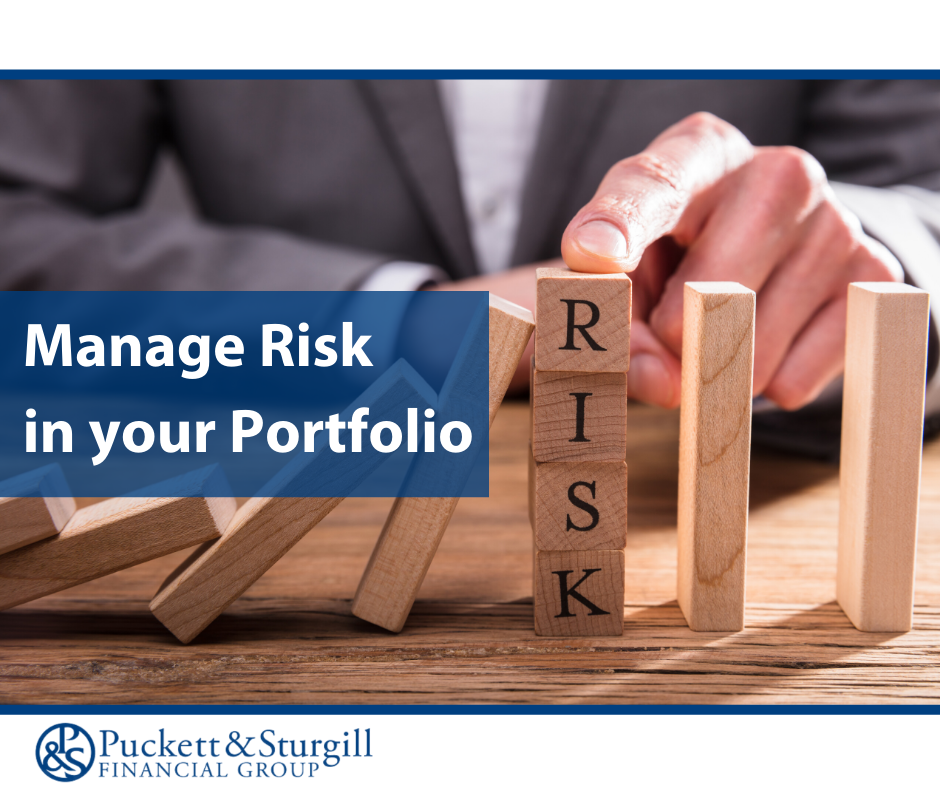
Manage Risk in your Portfolio

To most people, “risk” evokes negative images — driving faster than the speed limit, placing bets on “a long shot,” or traveling alone to unfamiliar places. Mention risk in terms of investing and people might think about losing their life’s savings. But in reality, investment risk comes in many forms, and each can affect how you pursue your financial goals. The key to dealing with investment risk is learning how to manage it. Step One: Understand Risk Barron’s Finance and Investment Handbook defines risk as the “measurable possibility of losing or not gaining value.” Fear of losing some money is probably one reason why people may choose conservative investments, even for long-term savings. While investment risk does refer to the general risk of loss, it can be broken down into more specific classifications. Familiarizing yourself with the different kinds of risk is the first step in learning how to manage it within your portfolio. Varieties of Risk Risk comes in many forms, including: Market risk: Also known as systematic risk, market risk is the likelihood that the value of a security will move in tandem with its overall market. For example, if the stock market is experiencing a decline, the stock mutual funds in your portfolio may decline as well. Or if bond prices are rising, the value of your bonds may also go up. Interest rate risk: Most often associated with fixed-income investments, this is the risk that the price of a bond or the price of a bond fund will fall with rising interest rates. Inflation risk: This is the risk that the value of your portfolio will be eroded by a decline in the purchasing power of your savings as a result

Read More »

5 Big Problems to Solve Before You Retire

It seems, sometimes, as though financial professionals come in only two flavors. There are those who promise everything is going to be fine; you don’t have to fret about retirement, they say, because they’ll help you make more than enough money to get you through. And then there are the hand-wringers who just can’t stop with the worrying and their warnings that you’ll never have enough. Somewhere in the middle is the reality, of course. Retirement should be a reward for years of hard work, and you don’t want to have to pinch every penny. You should be able to do the things you couldn’t when you were punching a clock every day. You should be able to look forward to retirement as one of the best times of your life. But, that said, if you want your money to last, if you want to live comfortably in your 60s, 70s, 80s and beyond, you should consider some common concerns, including: 1. How much will you have available to support yourself? Maybe not as much as you think. Financial professionals used to commonly say you’d likely be OK in retirement if you started with a 4% annual withdrawal rate. But some 2013 research by Morningstar’s head of retirement research, David Blanchett, may have changed that theory. Co-authored by two college professors who are experts in retirement planning, Michael Finke and Wade D. Pfau, the analysis found that a 2.8% withdrawal rate over a 30-year retirement had a much higher chance of success (90% vs. 48.2%) if interest rates remain low. If you have $1 million saved, that would take you from $40,000 a year down to $28,000. That’s quite a

Read More »

Critical Business Strategies for Entrepreneurs Preparing for Retirement

When you work for an employer, saving for retirement can be as simple as signing up for a 401(k) plan and making regular contributions, but when you own your own business, preparing for retirement can be more challenging. While pouring decades of your life into your business, you need to make sure you’re also thinking about what will happen when you retire. To leverage your business to help during your retirement, keep the following strategies in mind.   Choose the Most Effective Retirement Plan You should start preparing for retirement long before you ever plan to stop working. In that vein, consider consulting with a financial professional about the best retirement plans for small business owners. Ideally, you want a plan that has minimal administration costs and that allows you to make generous pre-tax contributions. Although there are many options, you may want to look into SIMPLE IRAs which allow small business owners to make tax-free contributions that are more than double the limit of a traditional IRA. Alternatively, cash balance plans are great for entrepreneurs who are trying to catch up on investment goals, and with these plans, you can contribute well over $100,000 per year.   Always Think About the Resale Value of Your Business When you’re trying to build a business, selling is often the last thing on your mind, but if possible, you should always think of the resale value of your company. As you run your business, keep very organized records and track expenses carefully. Potential buyers need to be able to fully understand your profit and loss statements, and ultimately, these records can make or break a deal. The ability to sell your business

Read More »

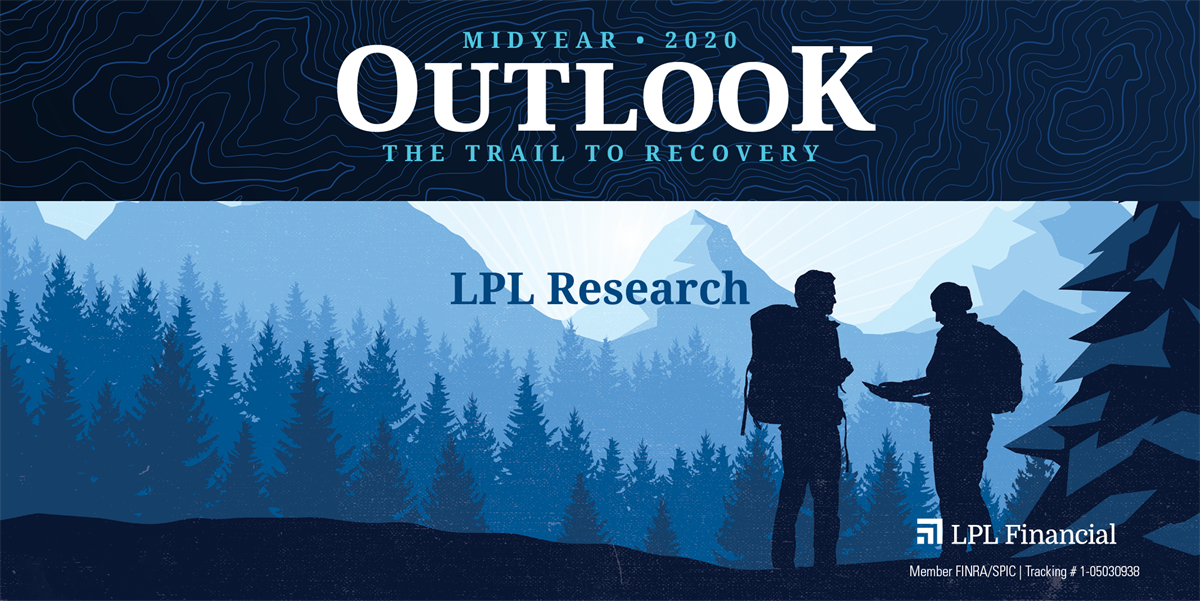
Midyear Outlook 2020: The Trail to Recovery

At the midpoint of 2020, we’re mindful that it’s been an extremely challenging year so far in the United States and around the globe. We’re in the midst of a pandemic that continues to impact all of us, our communities, and our economies. Together we’re looking ahead for new ways to face these challenges and how we can prepare now for better times. We’ve been impressed by what we’ve seen so far: The resiliency and accelerated innovation among large and small US businesses; efforts by our national, state, and local governments to support our communities; and most of all, the dedication and unprecedented cooperation among our front-line health professionals, medical researchers, and everyday people to guide us through this health crisis. CLICK TO DOWNLOAD THE MIDYEAR OUTLOOK 2020 Stocks already are pricing in a steady economic recovery beyond 2020 that may be supported if we receive breakthrough treatments to end the COVID-19 pandemic. However, the optimism reflected in stocks also may limit their upside potential over the rest of the year. It’s still going to be a challenging environment with significant uncertainty that may lead to more volatility for the next few months. Still, we continue to encourage investors to focus on the fundamental drivers of investment returns and their longterm financial goals. LPL Research’s Midyear Outlook 2020 provides our updated views of the pillars for investing — the economy, bonds, and stocks. As the headlines change daily, look to these pillars, or trail markers, and the Midyear Outlook 2020 to help provide perspective on facing these challenges now and preparing to move forward together. Also, read our special “Election 2020” section to find out how the economy has predicted

Read More »

How Different Generations Invest

Each generation comes of age during different economic circumstances, and this can have a major impact on their later money habits. Financial professionals have identified some investing tips for certain generations that can help make their portfolios more efficient. Learn more about the investment strategies most commonly used by Boomers, Gen X-ers, Millennials, and members of Generation Z—and how you can make them work for you. Boomer Investing Habits Baby Boomers, or those who are born between 1946 and 1964, are mostly retired or getting close to retirement. But while a financial professional will often recommend moving retirement funds out of risky assets like stocks and into bonds or money market funds, Boomers haven’t heeded this advice. In fact, a full eight percent of Boomers are entirely invested in stocks, while nearly half of all Boomers have a riskier allocation than analysts recommend.1 With the recent market run-up, this strategy has paid off in a big way—the number of 401(k) millionaires is at an all-time high, largely due to the number of aggressively invested Boomers. But if (or when) a downturn happens, those with too much stock exposure and no W2 income could be hurt. Gen X Investing Habits Members of Generation X, or “The Forgotten Generation,” are often overlooked in discussions of investments or personal wealth. But these investors, born between 1965 and 1979, are actually more conservative than Baby Boomers when it comes to their fund choices.2 Many Gen X-ers began investing in the late 1990s and early 2000s, only to find, a decade later, that a slumping stock market meant their balances barely budged. Gen X-ers are also more likely than Millennials to seek out the help of a financial professional. But because they’re in

Read More »

Raising Financially-Aware Kids in the Internet Age

Today’s kids have more information at their fingertips than past generations could ever have dreamed—but not all this information is always accurate. And when it comes to financial literacy, the ability to weed out misinformation is crucial when it comes to developing healthy financial habits. What can parents do to encourage their kids to become financially aware adults? Young Children: Learning What Money Is and What It Can Do It’s never too early for children to learn the basic principles behind money: as a means to exchange something you have for something you want. By bartering with your toddler—exchanging a toy for a treat, or setting up a play store at home where they can “purchase” items they want—you’ll be able to get them started on the concept of exchanging money. Once your children are a bit older, you can build on this initial knowledge by involving them in household purchases. For example, you can help them boost their math and financial skills by adding up the price of items you’re purchasing at the grocery store or choosing between products to ensure that the total stays below a certain amount. And with access to the internet, it’s easier than ever to see how much a specific item costs. Adolescents and Early Teens: Saving and Living Within Your Means Tweens and teenagers are better able to conceptualize cost and value, which makes this the perfect time to create habits that will help them live within their means. If your child receives an allowance, this can provide an opportunity to begin shifting the cost of certain treats and extras to them. For example, you may be able to show your child that one week’s allowance is enough to go to

Read More »

6 Essential Tips for Retirement Planning

Retirement planning is all about the future, your future. Whether you are classified as a millennial, Gen Xer, woman, or you are in your 40s-50s, retirement planning is a must. The key to successful retirement planning is starting young because it gives you more time to work towards your retirement goals. There are some keys to successful planning for those who have an employer and for business owners who wish to maintain their lifestyle after retirement. 1. Take Full Advantage of Matching Funds While most of us do not have a pension plan we can depend on when we retire, one new benefit many have is matching funds offered by employers. These funds are dependent on your company retirement plan’s policy regarding matching funds. The sooner you start taking full advantage of matching funds, the better a cushion you will have after retirement. 2. Use the Retirement Savings Credit For those who are eligible for the retirement savings credit[1] on their taxes, take this credit annually. This credit is available for many lower income earners and helps encourage you to save for retirement by offering a credit of up to $1,000 for single taxpayers and up to $2,000 for joint filers. These credits reduce the amount of income tax owed which allows you to invest in your retirement. 3. Maximize Your Health Savings Account Your health savings account (HSA)[2] can help you pay medical bills while you are working. However, thanks to the ability to maximize your donations while working, these funds can also be used during retirement to help you maintain your lifestyle. If you contribute the maximum amount annually, you can use these funds tax-free to pay out-of-pocket medical expenses after retirement. 4.

Read More »