Central Bank Season

When seasons change, the major central banks meet. The Federal Reserve, European Central Bank, and Bank of Japan all met in September to discuss their outlooks on the economy and monetary policy going forward. Key observations from the central bank meetings include maintaining policy while keeping an eye on COVID-19. Federal Reserve Expectations for major changes at the Federal Reserve (Fed) September meeting were low. The Fed had completed its framework review at the annual central bank symposium at Jackson Hole, Wyoming, in late August and announced its shift toward flexible average inflation targeting then. While no major policy decisions were made at the September meeting, the Fed did alter the language of its guidance to align with the change in inflation targeting, allowing for potentially higher inflation before it would consider raising rates. The Fed “dot plot,” a graphical projection of when Fed members expect to see higher rates, revealed that voting members expect rates to remain at the zero-bound until at least 2023. The Fed also continues to express concern for downside risks to the economy. Although the Fed has reiterated that negative policy rates seen in Europe and Japan are not under consideration, adjustments to the policy rate are only one mechanism for further easing of financial conditions. The Fed also can provide additional support through adjustments to its asset purchase programs or changes to other available liquidity facilities. However, the current stance may leave the Fed vulnerable to being blindsided by a better-than-expected recovery, which may have longer-term implications on inflationary forces. European Central Bank The European Central Bank (ECB) chose to leave its policy rate unchanged and also chose not to revise its primary COVID-19 relief package,


Read More »

What You Should Know About Contributing to an IRA at Every Age

A traditional IRA offers a great way to shield income from taxation while boosting your retirement accounts. Meanwhile, a Roth IRA can let you pay tomorrow’s taxes today. But how can workers who are eligible to contribute to either type of account decide where to allocate their retirement funds? Learn more about contributing to an IRA at every age and stage of your career. IRA Contribution and Deductibility Limits All workers who have any earned income are eligible to contribute to a traditional IRA (at least up to the total amount of their earned income for the year).1 For many taxpayers, the ability to deduct IRA contributions can mean the difference between taxes owed and a tax refund. However, this IRA contribution isn’t tax-deductible for everyone. If you’re covered by a retirement plan at work and your household income exceeds the following levels,2 your deduction may be limited or eliminated: For single or head of household taxpayers, a modified adjusted gross income (MAGI) of $65,000 to $75,000 will limit the IRA deduction, while a MAGI of more than $75,000 will eliminate it completely; For taxpayers who are married filing jointly, a MAGI of $104,000 to $124,000 will limit the IRA deduction, while a MAGI of more than $124,000 will eliminate it completely; and For taxpayers who are married filing separately, the IRA deduction is eliminated when the taxpayer’s MAGI exceeds $10,000. Another retirement savings vehicle is the Roth IRA. This IRA does not permit deductible contributions but instead allows for tax-free growth—that is, after turning 59.5, the account holder can withdraw any amount from the Roth without paying a dime in tax.3 Taxpayers who are married filing jointly can contribute

Read More »

Women: What You Should Know When Starting a Business

According to the Women’s Business Enterprise National Council, as of 2018 there were 12.3 million women-owned businesses in the United States (representing 40% of all businesses), employing over 9 million people and generating $1.8 trillion in sales.1 Many of these businesses started small, begun by women seeking the exciting and potentially rewarding experience of “being their own boss” while doing something they enjoy. If you’re thinking about starting your own business, you’ll need a sound plan, a little creativity, personal dedication, and probably some form of financial investment. Before you make the commitment to starting your own business, here are a few important factors to consider. Personal investment Why do you want to start a business? For the most part, you should believe you have a great idea that you are passionate about. Giving your business a chance to be successful will require a personal commitment and probably some sacrifices. Are you prepared to invest the time, money, and personal resources to get your business started? As you might imagine, there’s a lot that goes into starting a business. You’ll have to do some market research to determine the potential size of your market, identify the competition, and set the price of the goods or services you’ll offer. You should develop a written business plan, research the best legal entity to use for your business, and understand what licenses and/or permits you’ll need. You’ll have to figure out how much capital you’ll need to start your business, and where that capital will come from. Type of business What kind of business do you want? Do you have a unique idea, or do you want to get involved in a type

Read More »

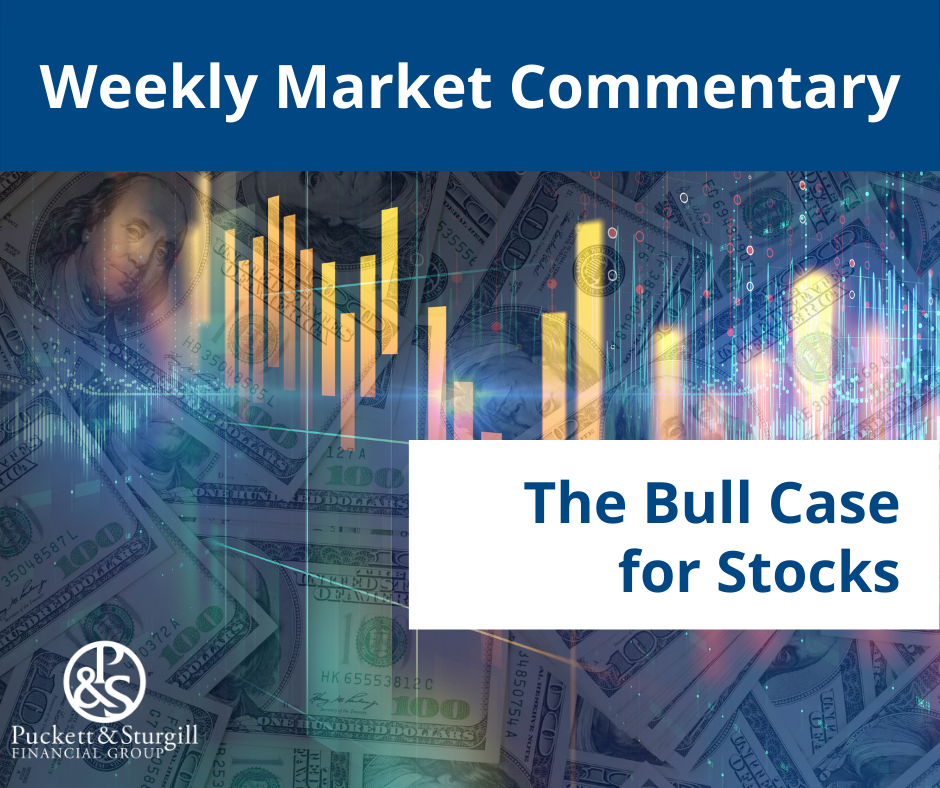
The Bull Case for Stocks

Markets have been on a wild ride in September so far, with a strong first two days of the month followed by one of the sharpest 10% corrections ever for the NASDAQ. The case can be made that stocks may move higher over the rest of 2020 despite a number of risks, including a possible increase in COVID-19 cases, heightened US-China tensions, and election uncertainty. Wild Ride After virtually no volatility since March, market-watchers got a heavy dose of it with the recent three-day 10% correction in the NASDAQ—one of the fastest corrections ever, and the fastest ever from a record high. Historically, the NASDAQ has tended to rise after fast corrections from new highs [FIGURE 1]. Stocks were higher 6 and 12 months after those corrections more than 90% of the time going back 40 years, with the end of the 1990s bull market the glaring exception. Many of these examples took place during the technology boom in the late 1990s, but the history is still instructive. Even with the 4% drop in the S&P 500 Index over the four trading sessions last week, and the nearly 7% drop from September 3 to September 8, the index is still up from the March 23 lows and higher year to date, as of September 11, 2020. The Case for More Gains The more difficult question is where stocks will go from here. We continue to believe stocks may be pricing in an overly optimistic recovery scenario in the near term and work is still needed for stocks to grow into their current valuations. However, we think the case for stocks to end the year higher from where we are now is

Read More »

How to Protect Your Wealth as You Get Older

As you get older and closer to retirement, your financial practices need to shift slightly as you transition from working and saving to relying on your nest egg. As you approach this stage of your life, you need to take steps to protect your wealth. Keep these tips in mind. 1. Shift Toward More Conservative Investments As a general rule of thumb, you can tolerate a higher level of risk when you are younger than when you are older. As you get older, you should shift from high-risk toward more conservative investments. High risk investments have the potential to net you a lot of profits, but they also have a heightened chance of losing you money. In contrast, low-risk investments offer smaller but more consistent gains. When you’re young, you have time to weather the ups and downs of high risk investments, but as you get older, you need a safer, more predictable portfolio. 2. Invest in Long Term Care Insurance Unfortunately, aging can also usher in health problems, and nursing homes can easily cost $100,000 or more per year. If you want to ensure that you won’t lose your assets if you need to move into a nursing home, you may want to invest in long-term care insurance. Keep in mind that Medicare does not cover staying in a nursing home. Please keep in mind that insurance companies alone determine insurability and some people may be deemed uninsurable because of health reasons, occupation, and lifestyle choices. Guarantees are based on the claims paying ability of the issuing company. 3. Consider Delaying Social Security Payments Whether you need to live on Social Security payments or plan to invest the funds,

Read More »

What to Do If You’re Working From Home Longer Than Expected

As the threat of the coronavirus swept through the nation in March, many businesses sent their workers home, and now, as fall looms around the corner, many people are continuing to work from home. If you’re working home longer than expected, you are not alone. Want to make the best of this new situation? Check out these tips. Optimize Your Work Space for Productivity If working from home is likely to continue indefinitely, consider setting up a more permanent workspace. Invest in a desk, a comfortable chair, a better computer, some inspirational art to hang on the walls, or whatever helps make your space feel more conducive to productivity. Miss the buzz of the office? Then, you may want to look into co-working spaces with socially distant protocols. This set up can be a great middle-ground between going into the office and staying at home all day. Consider a Permanent Work-From-Home Arrangement Being in limbo can be hard. If you’re not sure when the office is going to open again and you enjoy working from home, ask your boss if you can make a permanent transition. Many employers may be open to this idea because it can save them money in office costs. To successfully negotiate an arrangement, you may want to be open to a flexible schedule. Then, once the office reopens, you can do part-time at home and part-time in the office with your colleagues. Crunch the Numbers Whether you plan to work from home permanently or only until the office reopens, you may want to take some time to see if working from home is saving you money or costing you money. If you’re spending extra money

Read More »

National Life Insurance Awareness Month

September is National Life Insurance Awareness month. And while most of us likely recognize that life insurance provides us peace of mind and security, there may be a few things you don’t know. Life Insurance is Not Just for the Young Many people – but not enough – will buy life insurance in young adulthood. But life coverage provides some benefits even as you close in on age 60. Let’s say you’re 57. Consider these four questions before deciding on a type of life insurance. What do You Need? At 57, you are either retired early or close to retirement. Your family most likely depends less on you as your children, hopefully, live on their own, out of the house. Regardless, you probably still want to provide in part for your family – the reason life insurance remains important. With luck, you suffer from no medical ailments. You easily think your good health will continue forever – but illness happens, and happens more with age. Other events later in life bring reasons for life insurance too. Many young adults often secure coverage after marrying or having a baby. But the number of American women giving birth in their 40s continues to rise as does the number of men and women waiting longer to marry. What is Term Life? Life policy needs vary with your age. A term life policy appeals to many ages, particularly someone 57. Once a term policy expires, you decide whether to renew it or to let the coverage end. In addition to being cheaper than whole life or other life insurance types, term offers protection against a number of different bad scenarios and sells for several

Read More »

COVID-19 Delaying Your Retirement Date?

Recent surveys have indicated that many of us are rethinking our retirement plans because of COVID-19. In fact, one survey from the nonprofit group Life Happens suggests that a whopping 43% of Americans say they plan to postpone and continue working past their retirement date because of COVID. As a financial professional, this is troubling for lots of reasons. And while it’s impossible to make blanket statements or give advice that fits the masses, there are three important questions you need to ask yourself before delaying your retirement. Three Important Questions Before you make a decision to postpone your retirement, it’s important that you make an honest assessment of where you are – and how you got there. Ask yourself: How is your health? Did you know that 4 out of 10 current retirees said they were forced to retire earlier than planned because of health issues? Of course you don’t know what the future holds for you in terms of your health, but an honest assessment is a great investment in you. How is your asset allocation? More specifically, if you were expecting to retire in say 3 years, were you invested 100% in equities hoping for one or two “great” years from the stock market? Not reallocating your portfolio away from equities the closer you get to retirement is actually a pretty common mistake. But it can be devastating too. Did you alter your financial plan because of COVID? Asked another way: did you change your investments because you were scared? Trying to time the market based on fleeting emotions can be a dangerous game. Sure, Delaying Might Make Sense… Intuitively, working in your retirement years and saving

Read More »

Avoid The Market Timing Trap in Retirement

After decades of adding to your retirement accounts, making the mental switch to withdrawal mode can be a challenge. It may be tempting to try to time the market to mitigate the risk of any sudden drops or ongoing turbulence. However, market timing is almost unequivocally a bad idea, especially when you no longer have the ability to financially recover from major mistakes. Learn how creating a financial plan for your retirement can help you avoid any sudden, costly moves. Why Market Timing Doesn’t Work It can be painful to watch your hard-earned money evaporate during a particularly rocky period in the stock market. This makes it tempting to sell when values start dropping, then buy back in once they’re on the rebound. However, successful market timing requires investors to be right not once but twice—selling near the top and buying back in at the bottom. Predicting both the market high and low can be a challenge even for the most experienced investors, and many of the top-performing days in the stock market are interspersed among some of the most poorly-performing days. In fact, someone who found themselves sitting on the sidelines during the best 10 market days between 1998 and 2019 had their total investment return cut in half.1 Missing less than two weeks over two decades may seem like a blip in the grand scheme of things, but this shows that even a short stint of poor market timing can have lifelong consequences. Instead, it’s important to find an asset allocation you’re comfortable with, and then stick with it through times of turbulence and prosperity. How a Financial Plan Can Help One way to avoid fiddling with your

Read More »

Maintaining Your Financial Records: The Importance of Being Organized

By taking the time to clear out and organize your financial records, you’ll be able to find what you need exactly when you need it. What should you keep? If you tend to keep stuff because you “might need it someday,” your desk or home office is probably overflowing with nonessential documents. One of the first steps in determining what records to keep is to ask yourself, “Why do I need to keep this?” Documents you should keep are likely to be those that are difficult to obtain, such as: Tax returns Legal contracts Insurance claims Proof of identity On the other hand, if you have documents and records that are easily duplicated elsewhere, such as online banking and credit-card statements, you probably do not need to keep paper copies of the same information. How long should you keep your records? Generally, a good rule of thumb is to keep financial records and documents only as long as necessary. For example, you may want to keep ATM and credit-card receipts only temporarily, until you’ve reconciled them with your bank and/or credit-card statement. On the other hand, if a document is legal in nature and/or difficult to replace, you’ll want to keep it for a longer period or even indefinitely. Some financial records may have more specific timetables. For example, the IRS generally recommends that taxpayers keep federal tax returns and supporting documents for a minimum of three years up to seven years after the date of filing. Certain circumstances may even warrant keeping your tax records indefinitely. Listed below are some recommendations on how long to keep specific documents: Records to keep for one year or less: • Bank or

Read More »