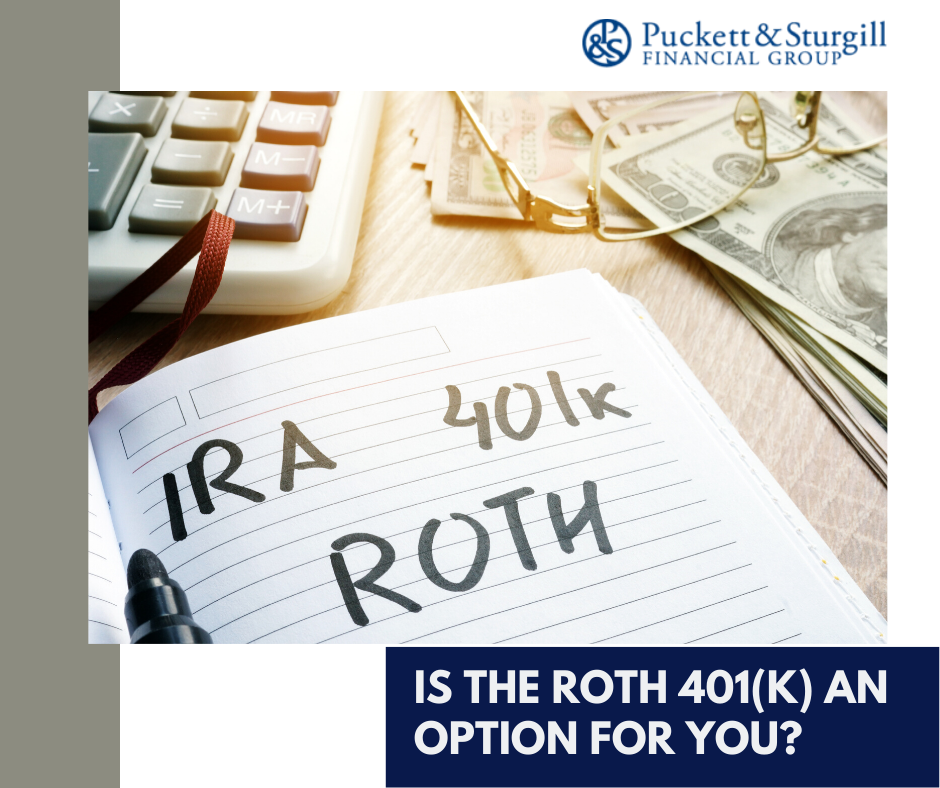
Is the Roth 401(k) an Option for You?

Since it first became available in 2006, many employers have added the Roth 401(k) to their benefit packages as a retirement savings option. A Roth option is available for Individual Retirement Accounts (IRAs) and 401(k) and 403(b) accounts. To see if a Roth 401(k) would be appropriate for your situation, let’s take a closer look.   To Roth or Not to Roth To start, let’s consider the advantages and disadvantages of both types of 401(k)s. With a traditional 401(k), you make contributions on a pre-tax basis, which lowers your current income subject to taxation, and earnings in the account have the potential to grow tax-deferred. However, your distributions in retirement are subject to ordinary income tax. On the other hand, your contributions to a Roth 401(k) are made with after-tax dollars, but potential earnings and distributions are tax-free, as long as you have held the account for at least five years and are at least 59½ years old. However, non-qualified distributions may be subject to income tax and a 10% early withdraw penalty may also apply. So, is it better to pay taxes on your retirement funds now or later? The most appropriate choice for you may depend on your current tax situation and your long-term financial goals.   It is important to keep in mind that the 401(k) annual deferral limits—$19,000 for taxpayers under age 50 and $25,000 for those age 50 or older in 2019—apply to all 401(k) contributions, regardless of whether they are made on a pre-tax or after-tax basis. If you contribute to a Roth 401(k), you may have to reduce or discontinue contributions to your employer’s traditional 401(k) plan to avoid exceeding these limits. However,

Read More »

Balancing Act: Saving for Both Retirement and College

Linda and Peter are worried about their financial future. “We want our one-year-old son, Raymond, to go to college, but we’re concerned that in 17 years, the cost might be more than we can afford,” says Peter. “We also need to save for our retirement,” adds Linda. “Can we reach both of these goals?” Linda and Peter aren’t alone. Millions of Americans are finding it a struggle to balance the high cost of higher education while saving for their own retirement. If you’re one of them or would like to help someone faced with this situation, put your worries aside. Fortunately, there are steps you can take to help overcome this double-sided planning hurdle. For example, because Linda and Peter won’t need their money for 17 years, they decided to begin investing now and often. Starting a regular investment program long before needing the money can potentially work in their favor. That’s because of compounding — which is what happens when previous earnings from an investment remain invested and, in turn, earn more money. They also decided to make the most of their contributions by investing in vehicles that would generate important tax benefits. They chose to funnel $100 each month into a 529 College Savings Plan, which would allow their contributions to benefit from tax-deferred growth and tax-free withdrawals. Meanwhile, they also set aside $200 a month into an IRA. When they receive raises, Linda and Peter will increase their contributions to both accounts. Getting a Late Start Sandy and Paul have a different issue. “We don’t want to be a financial burden on our kids when we’re older, so we’ve always opted to max out our 401(k)s and

Read More »

Retiring Business Owners – Plan for Succession

If you’re a small business owner, you’ve invested a great deal of time and effort into building your company. With day-to-day demands, it may be difficult to imagine your eventual transition into retirement. Yet, if you want to build personal financial security and ensure business continuation, it is important to plan ahead. Business succession planning can help create retirement income for a retiring business owner and facilitate the transfer of operations and/or ownership to family or another entity. A succession plan can also provide a strategy to handle unforeseen events, such as death or disability. Laying the Foundation It is never too early to begin planning for succession. An early start can allow you ample time to develop an appropriate exit strategy, choose the right person to be your successor, and train your successor to manage the daily operations of your company. Consider the following points to create a foundation for a successful plan: Valuate Your Business A key aspect of planning for continuation is calculating the worth of your business. There are a variety of techniques for business valuation, and the most appropriate will depend on your business circumstances. A qualified professional can help you choose strategies for valuation. Plan Your Exit Strategy It is important for a retiring business owner to plan his or her departure from the day-to-day operations of the business. A solid plan can help ensure this transition will go smoothly, as well as facilitate the transfer of ownership. Choose a Successor If you plan to keep ownership and control of your business within your family, start by assessing your family members’ interests and qualifications, and how well they match the needs of the business.

Read More »
401(k)

What is the Difference Between an Account Rollover and a Transfer?

One common change that investors make during their financial journeys is to move funds from one retirement account to another. Whether this move occurs for tax purposes, because of a change in employment, or for another reason, it’s important to consider how this change will be made: as a rollover or transfer.

Read More »
Ask an Advisor

Ask an Advisor: How Much Do I Need for Retirement?

Saving for retirement is an incredibly complex decision and conversation. It’s got to be one of the most common questions that we’re asked here at P&S. There are a lot of rules of thumb out there. But, at the end of the day, it’s an incredibly personal decision, and there’s no ‘one size fits all’

Read More »
Retirement Planning

Savings Rates for Retirement

As you plan for retirement, there are a few items that may get a larger amount of your attention as you try to fit everything into place. However, as you look toward your retirement, it’s important to remember an essential factor that sometimes gets pushed to the side: savings rates.

Read More »