RESEARCH

Financial Resolutions for Individuals Nearing Retirement

Getting close to retirement is exciting, but it often brings a little worry about your financial future. The closer you get, the more you may be concerned with the rising living costs and if your finances are on track to allow you to live as planned when retirement comes. Whether your retirement is within the next couple of years or the next five, the new year is the perfect time to make financial resolutions to help you toward your retirement goals. Below are just a few financial resolutions to consider this year.

Work on Fully Funding Your Emergency Fund

While an emergency fund is crucial when working, it is equally important when you retire. Emergencies will happen when you least expect it, and if you find yourself on a tighter budget during retirement, your emergency fund will be more crucial than ever. A good rule of thumb is to have three to six months of expenses saved up, which should be able to cover sudden house repairs or medical expenses.1

Continue to Save

Even if your savings are where you want them to be, you want to keep saving so that your money will continue to grow, and you will have a buffer for emergencies or higher-than-normal inflation rates. A good rule of thumb is to place between 5 and 10% of your gross income into yearly savings. If you are able to put in more, that is even better and may help you save a little on your end-of-year taxes as well.1

Make a Pre-Retirement and Post-Retirement Budget

One excellent resolution to make to help you stay on your desired financial track is preparing and sticking to a budget. Ideally, you will want to make a budget for your current financial situation and what your post-retirement situation may look like. This way, you will know how much more you need to save. Consider using a budgeting app or spreadsheet software that allows you to record actual expenses so that you are able to see where your budget may need adjusting.2

Pay Off Your Debt

Ideally, you will want to retire as debt-free as possible. Without the stress or debt payments, you will likely have more funds to live comfortably in retirement and have less stress about money. If you have a lot of high-interest debt, you may consider consolidating it into a low-interest loan with terms allowing it to be paid off before you retire. You may also want to consider taking advantage of zero-interest balance transfers so that you are able to pay down the debt faster without accruing more interest.2

Sign Up for Credit Monitoring Software

Another resolution to make is signing up for credit monitoring software. Identity theft is increasing, and becoming a victim of it may lead to significant financial problems and low credit scores. Credit monitoring software will also help you to keep an eye on your debt and offer insight into its financial management.1     Important Disclosures: The opinions voiced in this material are for general information only and are not intended to provide specific advice or recommendations for any individual. All information is believed to be from reliable sources; however, LPL Financial makes no representation as to its completeness or accuracy. This article was prepared by WriterAccess. LPL Tracking #502472-04 Footnotes: 15 financial resolutions for 2023 and how to accomplish them, Fortune, https://fortune.com/recommends/banking/financial-resolutions-for-the-new-year/ 210 financial New Year’s resolutions to set now and achieve in the new year, CNBC, https://www.cnbc.com/select/financial-new-years-resolutions/

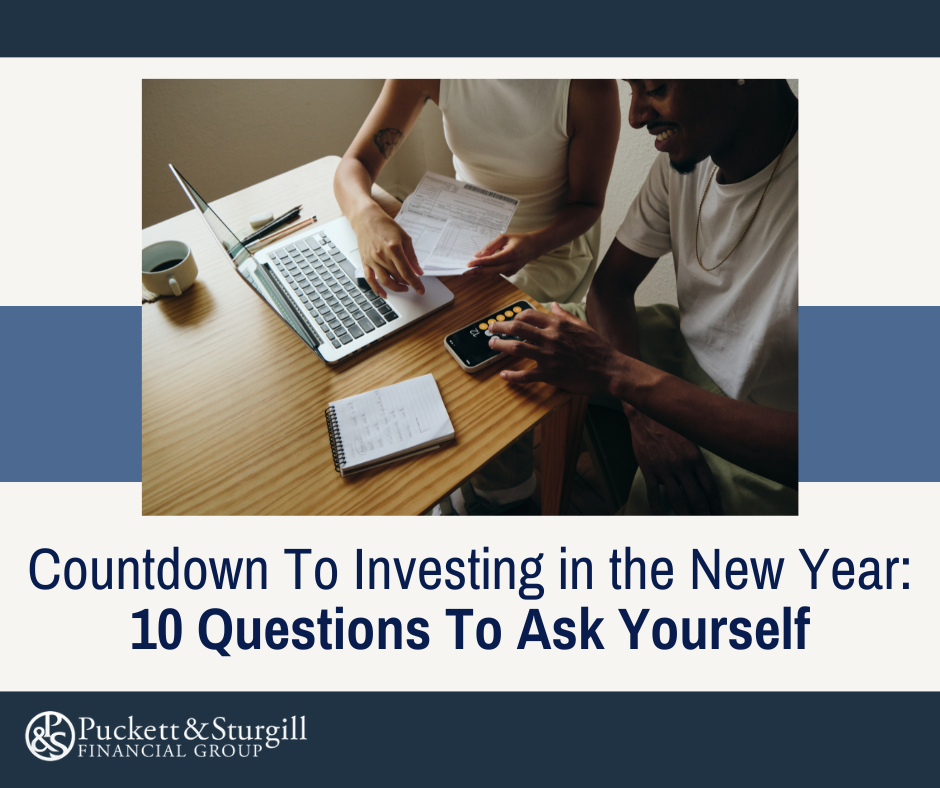
Countdown To Investing in the New Year: 10 Questions To Ask Yourself

If one of your New Year's resolutions involves enhancing and expanding your investment portfolio, look no further. In a true New Year's Eve countdown tradition, ask yourself these 10 questions to help review your investment plans.

10. What's My Investment Timeline?

Not every investment is appropriate for every timeframe. Someone who hopes to retire in the next few years might seek very different investments compared to someone who is just starting in the workforce. Someone investing funds in a young child's college account may want a different asset mix than someone establishing a family trust to benefit their children and grandchildren. Consider your goals and timeline before selecting individual investments for each account type, such as a 401(k), individual retirement account (IRA), 529, or taxable funds.

9. What Are My Financial Weaknesses or Blind Spots?

Another key part of investing success may involve recognizing—and controlling—your weaknesses and blind spots. If you know you tend to panic-sell when stocks go down, you may want to invest in accounts that restrict frequent trading or require a waiting period before transaction executions. Those who struggle with paperwork may wish to streamline their investment portfolio by having fewer accounts.

8. What Do I Want To Do With My Investments?

This strategy is another way of assessing investment goals. Knowing what you would like to achieve—whether a comfortable retirement, a new car, or a paid-for college education for your children—may allow you to work backward from that point and set relevant goals.

7. What Is My Risk Tolerance?

If you have an unlimited risk tolerance, you might not need to invest—instead, you might foolishly bet it all on the lottery. However, those not comfortable with that level of risk have available investment options ranging from the more stable to the ultra-risky. Finding an investment mix for your risk tolerance may go a long way toward easing frazzled nerves when the market takes a dip.

6. Am I Diversified Enough?

Another key part of risk tolerance involves diversification. Putting all your money into a single stock or sector, from crypto to energy to tech, may leave you vulnerable to volatility. Make sure that your assets are spread among various investments to avoid major swings in value potentially.

5. When Do I Sell This Investment and Why?

When you analyze specific investments and their role in your portfolio, it might be a good idea to consider what would cause you to sell the asset, such as a rise or drop in price. Perhaps a change in the company's structure? Whatever your reasons, articulating them may help you stick to your plan.

4. What if My Investment Becomes Worthless?

Many stocks that made up the S&P 500 and Dow Jones index at inception no longer exist. Diversification might help prevent one bad investment from wiping out your entire portfolio. Still, it may be a good idea to consider what would happen and how you would respond if the value of your investment dropped to zero.

3. Why Do I Still Own This Investment?

Periodically, you should review your portfolio to make sure everything you invested in is something you still want to own. If you are holding onto a loser and do not have any reasons to support continuing to own the stock, it may be time to sell.

2. Do I Know What I'm Investing In?

One question is whether you invest in something you know about or simply invest in what the media tell you. If you have specific knowledge of a particular industry, you may know better than others about whether an investment is good.

1. Should I Manage My Investments?

A typical investor might be unable to beat the management results of some full-time financial professionals. Unless you have the time, knowledge, inclination, and emotional fortitude to manage your investments, it may be worth considering leaving investment management to a financial professional.     Important Disclosures: The opinions voiced in this material are for general information only and are not intended to provide specific advice or recommendations for any individual security. To determine which investment(s) may be appropriate for you, consult your financial professional prior to investing. Investing involves risks including possible loss of principal. No investment strategy or risk management technique can guarantee return or eliminate risk in all market environments. There is no guarantee that a diversified portfolio will enhance overall returns or outperform a non-diversified portfolio. Diversification does not protect against market risk.   S&P 500 Index: The Standard & Poor's (S&P) 500 Index tracks the performance of 500 widely held, large-capitalization US stocks. Dow Jones Industrial Average (DJIA): A price-weighted average of 30 blue-chip stocks that are generally the leaders in their industry. This article was prepared by WriterAccess. LPL Tracking #1-05337702.

Charitable Giving: How Small Business Owners Can Make a Big Impact

Charitable giving is an excellent way for businesses to help others while taking advantage of additional tax breaks. Billions of dollars are given each year in the U.S. to a wide range of charities providing valuable community services. While large corporations may be responsible for a large portion of the donated funds, small businesses also make a large impact with their contributions.

3 Ways Small Businesses Can Donate to Charities

While cash donations are one of the most common ways to give to charities, small businesses may also provide support in other ways.

1. Volunteering

Instead of donating money, your business will be able to make an impact by donating their time to a local charity, such as a soup kitchen or homeless shelter.1

2. Host a Charity Drive

If you see a need in their local community, consider helping by starting a drive to collect needed items, such as a holiday toy drive or canned food drive.1

3. Take Advantage of Local Sponsorship Opportunities

Local youth organizations and groups are often looking for sponsorship. Consider sponsoring a sports team or local community event. You will also get a little advertising and community goodwill out of your involvement.1

Tips for Small Business Giving

While there are no set rules on how or how much you should give to charity, below are a few helpful tips to help your business get started.

Find a Cause That is Meaningful to Your Company or Employees

All types of charities are looking for support, which means it is easy to find one that resonates with your business culture and employees. This way, you will be more personally connected to your contribution, which will mean something to you and your employees.2

Research Charities You Are Interested In

Take some time to learn about the different charities you may wish to contribute to. Through some research, you will be able to find out how much of the contributions go into their programming, what kind of services they provide to the community, and the impact your donation may have. This will give you a clearer picture of how you are helping through your contribution.2

Build a Relationship With Your Chosen Charities

Even if you only contribute to your charity once a year, you want to stay connected and find out other ways you are able to assist throughout the year. This is a great way to stay connected with your community, network, and build relationships with other businesses.2

Get Your Employees Involved

Have your employees volunteer with the charity or offer contribution matching for employees who donate independently. This will help your employees connect with the charity and provide the charity with much-needed assistance throughout the year.2 It is important to remember that every dollar counts for charities, so even if your business only contributes a small amount, it will still be making a huge impact on the community. Important Disclosures: The opinions voiced in this material are for general information only and are not intended to provide specific advice or recommendations for any individual. This information is not intended to be a substitute for specific individualized tax advice. We suggest that you discuss your specific tax issues with a qualified tax advisor. All information is believed to be from reliable sources; however, LPL Financial makes no representation as to its completeness or accuracy. This article was prepared by WriterAccess. LPL Tracking #1-05377994

Footnotes:

1 “Small Business Guide to Charitable Giving and Tax Deductions,” Business News Daily, https://www.businessnewsdaily.com/10470-small-business-guide-charity-donations.html 2 “Six Best Practices For Small Businesses To Give Charitably,” Forbes, https://www.forbes.com/sites/krisputnamwalkerly/2018/12/17/6-best-practices-for-small-businesses-to-give-charitably/?sh=60dcdffa2c98

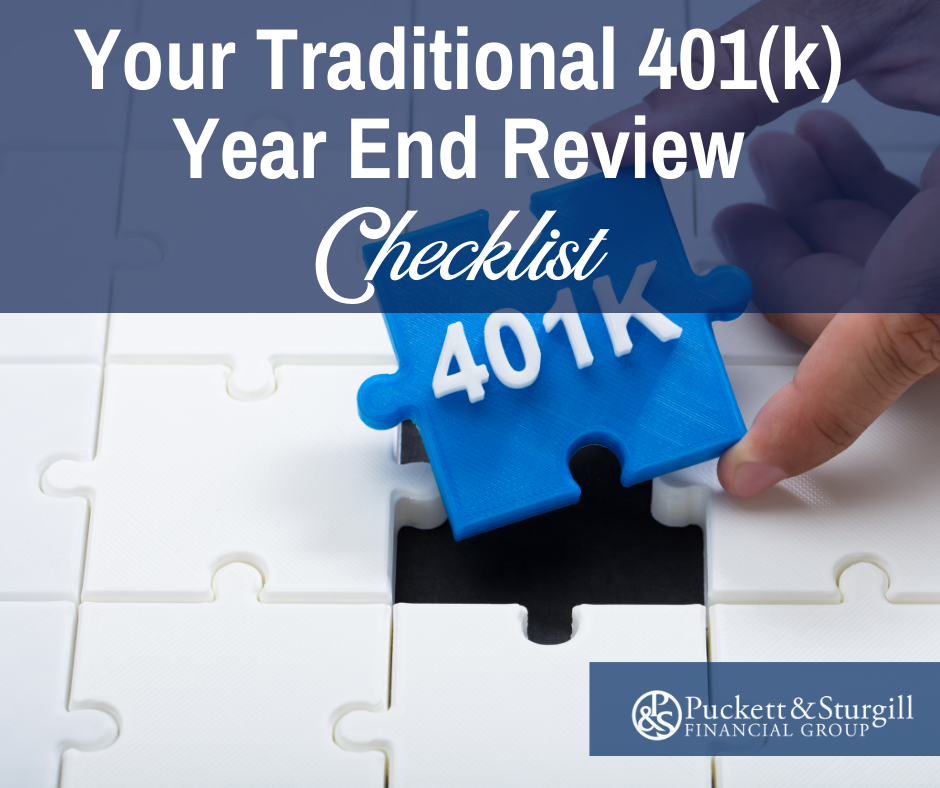
Your Traditional 401(k) Year-End Review Checklist

A 401(k) plan is one of the most popular and effective techniques for saving for your retirement. A company will automatically withdraw and contribute money from each paycheck to your 401(k) plan. Some employers will even match a percentage of the contribution. Are you maximizing these contributions? There are also limits on how much you are allowed to contribute annually. Here is a 401(k) end-of-the-year checklist you may find beneficial in keeping up with your retirement strategy.  Review your goals There is a good chance that you have created short- and long-term goals. You may have met with a financial professional who helped you create a strategy based on the lifestyle you hope to have in retirement. To reach your long-term goals, you will often pursue short-term goals. As life changes, so might these goals, and reviewing your goals at the end of the year can be beneficial.  

Consider increasing your contribution amount

For 2023, the maximum contribution for employees is $22,500, or $30,000 if you are 50 or older. Catch-up contributions for those 50 or older are $7,500. It is possible to make non-tax deductible contributions to traditional 401(k)s above the employee contribution limit. The total 401(k) plan contributions an employer and employee can make cannot be more than $66,000 for 2023. For those 50 or older, the maximum is $73,500.  

Get a 401(k) match from your employer if it is offered

Review your plan to determine if your employer offers a 401(k) matching contribution. Typically, employers match employee contributions up to a percentage of annual income. Your employer can elect to match a percentage of contributions up to the limit or 100% of your contribution up to a percentage of your total compensation. If you are a highly compensated employee, your employer may only match up to a specified dollar amount regardless of your income. As an example of how matching works, say your employer offers to match 100% of all your contributions every year up to 4% of your annual income. If you are earning $50,000, the total amount your employer would contribute is $2,000. You can contribute more than 4%, although your employer won’t match it.   Even if you have multiple 401(k) plans with different employers, the total employee contribution plan stays the same if you have multiple 401(k) plans with different employers. Multiple plans don’t mean a higher contribution limit. The IRS adjusts 401(k) plan contribution limits annually for inflation.  

Review your beneficiaries

Life is a journey and is constantly changing. One moment you could be getting married or divorced, and the next, there could be a birth, death or a significant financial shift in the family. Years ago, you may have named a charity as one of your beneficiaries, and now it no longer exists. Because the 401(k) is in the background, you can easily forget about it. However, it is critical to review these details periodically, for example, at the end of the year to ensure the beneficiaries are current. Retirement account beneficiary designations hold precedence over will and trust directives. Suppose somebody is listed as a beneficiary on your retirement account, but someone else is on your will and trust directive. In that case, the retirement account will generally determine who gets the money.  

Maximize your tax benefits with a 401(k)

Contributing to a 401(k) is done on a pre-tax basis. This allows you to deduct your contributions in the year you make them, lowering your taxable income. However, this benefit only applies to traditional 401(k) plans, not Roth 401(k) plans. If invested, the money in a traditional 401(k) can accrue interest on a tax-deferred basis, meaning dividends and capital gains that grow within your 401(k) are not subject to tax until you start withdrawing. The RMD (required minimum distribution) age for 401(k)s is 73, expected to increase in the next few years. A 401(k) is particularly attractive if you believe you'll be in a lower tax bracket in retirement.  

Sign up for direct deposit

There are a few benefits to using direct deposit, the electronic funds transfer process where employers can transfer wages directly into an employee’s bank account. Direct deposit allows for convenience, efficiency, and potentially heightened security. However, there is always the risk of a data security breach, so monitoring your direct deposit payments is essential. There is also an element of enhanced privacy and control when you use direct deposit. Time sensitivity for receiving and cashing the check is no longer an obstacle. Money can automatically be withdrawn from the check and contributed to a savings account. Direct deposit has more pros than cons, but you should make a careful, informed decision- before deciding to use this money transfer method. A financial professional can help you determine if it aligns with your financial situation.  

Consult a financial professional

The money put into a 401(k) plan can be invested in stocks or bonds. Otherwise, it will remain in the account as cash. With any investment, risk is involved, and getting help from a financial professional can help you with managing risks that might arise and confidently grow your wealth over time. Some people may be hesitant to seek out the help of a financial professional because they think it is only for the wealthy. However, financial services can be affordable and help you save money over time.  

Important Disclosures:

This material was created for educational and informational purposes only and is not intended as ERISA, tax, legal or investment advice. If you are seeking investment advice. If you are seeking investment advice specific to your needs, such advice services must be obtained on your own separate from this educational material.   All information is believed to be from reliable sources; however, LPL Financial makes no representation as to its completeness or accuracy.   This article was prepared by LPL Marketing Solutions   Sources: 401(k) Contribution Limits for 2023 – Forbes Advisor 10 Tips for Managing Your 401(k) Account | Nasdaq How 401(k) Matching Works (investopedia.com)   LPL Tracking # 1-05377976

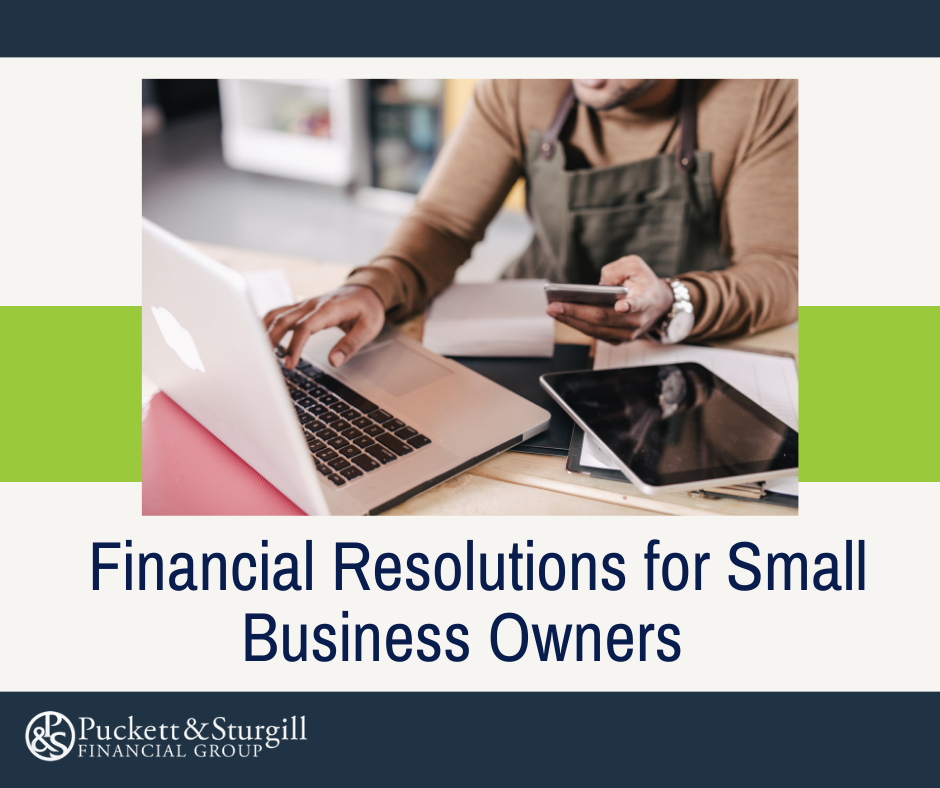
Financial Resolutions for Small Business Owners

The new year is fast approaching, and it is a good time for small business owners to make some financial resolutions to help lead them toward a solid financial path. Whether your business is just starting or you have been running it for decades, the new year is the time to review your financial situation and set some resolutions to help you with your future financial goals. Not sure where to get started? Here are a few business resolutions, no matter what type of business you own.

Don't Let Talks of Recession Derail Your Business Plans

There are ups and downs with everything in life, including business. While recent talks of a potential upcoming recession have many business owners worried about their financial future, it is important to remember that if your business plan is solid, it should be able to weather the ebb and flow that comes with economic fluctuations. As a business owner or entrepreneur, you are a natural risk-taker. If you feel confident that growing your business is the proper path, you shouldn't let the fear of recession hold you back.1

Maintain a Solid Relationship With Your Current Customers

New customers help you build and grow your company, but current customers serve as your existing support system. It is sometimes easy to forget them in the quest to obtain new customers. Always remember that it is usually cheaper to retain your current customers than to acquire new ones. So, while investing some money into developing new customers is essential, investing in your existing customers is also wise since the return on investment might be higher.2

Take Care of Your Employees

A solid team of experienced employees is crucial to maintaining your current customers and acquiring new ones. Unfortunately, recent years have shown us that it is getting harder to find employees. With so many companies looking to fill positions, it is crucial to be competitive and focus on keeping your current employees happy and productive. One way to do this is by creating a positive work environment, which may include flexible work schedules, help with continuing education, and other employee incentives.1

Keep Your Marketing Plan Moving Forward

If you are seeing a downturn in business, you may be tempted to cut your marketing costs to save money, but this path could end up hurting your business more in the long run. Resolve to keep your marketing plan in full force. When companies keep their marketing effort going, they often come out of a recession stronger than companies that don't. Marketing is about focusing on the long-term return on investment. When you weaken your marketing plan, the return may take longer.2

Make Networking a Priority

Networking is great for acquiring new customers, vendors, and employees. One connection may result in several more, meaning more exposure and growth. For your resolution, consider setting a monthly goal of how many new connections you want to make. Resolve to attend networking events in your area regularly.2     Important Disclosures: The opinions voiced in this material are for general information only and are not intended to provide specific advice or recommendations for any individual. All information is believed to be from reliable sources; however, LPL Financial makes no representation as to its completeness or accuracy. This article was prepared by WriterAccess. LPL Tracking #502472-05 Footnotes 1 Ten New Year’s Resolutions For Small Business Owners https://www.forbes.com/sites/rohitarora/2022/12/31/ten-new-years-resolutions-for-small-business-owners-in-2023/?sh=4b37095726e5 2 8 New Year's resolutions for small businesses: Pick a daily priority, prepare for emergencies https://www.usatoday.com/story/money/usaandmain/2021/12/29/small-business-8-new-years-resolutions/9033124002/

Spreading Holiday Cheer with Year-End Giving

The holidays are nearly upon us – a time of giving, goodwill to others, and embracing traditions. For many people, giving to a charity or organization that aligns with your values provides a sense of fulfillment. If you itemize deductions on your income tax return, you can deduct gifts made to charities. Here are six year-end giving strategies to spread holiday cheer with the additional gift of potential tax benefits.

1. Making cash gifts

If you give cash, you may deduct up to 60% of your adjusted gross income (AGI). Giving cash also provides the charity better flexibility when it comes to spending the money to help the people, animals, or the environment. Two disadvantages of giving a cash gift are liquidating a stock, bond, or other appreciated asset and being responsible for the generated capital gains tax, and you also don’t always know how the money is necessarily being used.  

2. Donating Stocks, Bonds, or other appreciated securities

If you are considering donating the earnings from appreciated stocks, bonds, real estate, or other appreciated non-cash assets directly to your charity of choice you may want to think about giving the appreciated asset directly to the charity over giving cash after selling them. This may be a beneficial strategy as it allows you to avoid the capital gains tax so long as you adhere to the rules. In addition, you would be eligible for a charitable income tax deduction up to the fair market value of the security you donate, up to 30% of your AGI. A financial professional can help you with the nuances of this type of giving strategy.  

3. Donor-advised fund (DAF)

A DAF is a fund managed by a third party that handles charitable donations given to a specified charity. Donors become eligible for an immediate tax deduction in that calendar year. They can give anonymously, knowing that the money can grow tax-free, and may be able to bypass capital gains taxes. There are various ways to give, including cash, stocks, bonds, and other appreciated assets. There are a couple of things to consider when deciding on a DAF. Initially, there may be a high start-up cost. Funds are not eligible for donor benefits, for example, scholarships and tickets, and there is limited control regarding grant-making. Being a DAF donor also gives you the authority to recommend grants from the fund to charitable organizations you support over time.  

4. Bunch your charitable gifts

Bunching your donations is a tax strategy where you make a multi-year contribution in a single year to maximize your itemized deduction for the year in which you make your donations. The strategy is to make your itemized deductions (including charitable donations) large enough to exceed the standard deduction amount. Bunching charitable gifts involves timing and the amount you plan to give. This has become a popular strategy after the Tax Cuts and Jobs Act of 2017 that nearly doubled the standard deduction through 2025. You have to remember that your donations must be to qualifying charitable organizations, generally non-profits with tax-exempt status under section 501(c)(3) of the IRS code.  

5. Contribute restricted stock

If you contribute directly to a public charity, including sponsors of donor-advised funds, the donor can qualify for an income tax deduction for the full fair market value (FMV) of the securities in an amount up to 30% of the donor’s adjusted gross income, with a five-year carryforward for any excess not deductible in the year of the contribution. When giving stock as opposed to the after-tax proceeds from selling the stock, the charity receives the full value of the appreciated stock and the donor is not subject to capital gains tax on the appreciation in the stock.  

6. Combine tax-loss harvesting with a cash gift

Tax-loss harvesting involves using capital losses to offset capital gains up to $3,000 of ordinary taxable income. Donors who itemize their deductions can then claim a charitable deduction for donating cash from the sale proceeds. But, to use this method, you have to understand when to apply it. Tax-loss harvesting only works on taxable investments. Several retirement accounts, for example, IRAs and 401(k)s are tax-deferred and therefore are not eligible to be used to offset taxable gains. Also, if you are somebody that just invests in mutual funds or exchange-traded funds (ETFs), tax-loss harvesting may be more difficult because to use tax-loss harvesting, the whole fund has to be down, therefore limiting its tax-saving capability.  

Year-End Giving, Your Financial Professional, and You

Charitable giving and the potential tax benefits are often complex and decisions not carefully weighed could impact you and your financial goals. Consider consulting a financial professional before making any financial decisions that could put a damper on your holiday cheer this year.     Important Disclosures: The opinions voiced in this material are for general information only and are not intended to provide specific advice or recommendations for any individual. The tax-loss harvesting and other tax strategies discussed should not be interpreted as tax advice and there is no representation that such strategies will result in any particular tax consequence. Clients should consult with their personal tax advisors regarding the tax consequences of investing and charitable giving. All information is believed to be from reliable sources; however, LPL Financial makes no representation as to its completeness or accuracy. This article was prepared by LPL Marketing Solutions   Sources: Using Restricted Stock and Other Equity Awards for Tax-Smart Giving (fidelitycharitable.org) Donor-Advised Fund Definition, Sponsors, Pros & Cons, Example (investopedia.com) What is a Donor-Advised Fund? | NPTrust 5 Situations to Consider Tax-Loss Harvesting - TurboTax Tax Tips & Videos (intuit.com)     LPL Tracking # 490957

5 Tax Benefits of Long-Term Care Insurance

Kitty O’Neill Collings, an American politician and pioneer in the area of international diplomacy, civil liberties, and social justice, once quipped, “Aging seems to be the only available way to live a long life.” Along with aging comes the certainty that most of us will gradually begin to deteriorate over the years, both physically and mentally, and many of us potentially might require long-term care. Because of this reality, long-term care insurance (LTC) becomes an attractive option. The government won’t help pay for your long-term care bill. Knowing about long-term care insurance and how you can make those premiums work for you may make it easier to create a strategy in preparation for those retirement years. Here are five tax benefits of owning long-term care insurance.  

1. Potentially Tax-Free

The Internal Revenue Service (IRS) may treat your long-term care insurance benefits as tax-free based on your policy limits and how it is structured. If benefits are considered reimbursement, they are 100% tax-free. If they are indemnity or cash, they are tax-free up to a specified amount per diem (see below in the Tax Deductibility portion).  

2. Tax Deductibility

Under section 7702(b), long-term care insurance has attractive tax benefits. However, only qualified long-term care insurance policies are eligible. The maximum amount eligible for the deduction per person is based on an age-indexed schedule.   Age at the end of the tax year 2023
  • 40 or younger: $480
  • 41-50: $890
  • 51-60: $1,790
  • 61-70: $4,770
  • 71 and older: $5,960
  Benefits paid are generally excluded from taxable income. However, some cash products that pay daily or monthly benefits not associated with actual bills are subject to a per diem limitation of $420 a day. Anything over that amount is subject to taxation unless there are bills to support the higher number.  

3. Health Savings Accounts

Health Savings Accounts (HSA) are personal savings accounts where you can add pre-tax dollars to pay certain health care costs. If you have an HSA, you can pay your long-term care insurance premiums. Due to the increasing inflation in 2022, the IRS increased contribution levels for 2023 to $3,850 for individual coverage or $7,750 for family coverage, up from $3,650 and $7,300 in 2022. For those age 55 and older, you are allowed an additional $1,000 contribution for ‘catch up.’ The IRS also includes a 2023 limit for Excepted Benefit Health Reimbursement Arrangements (EBHRAs) at a limit of $1,950, up from $1,800 in 2022. However, you have to be aware that not all policies have tax incentives. Linked benefit or hybrid life insurance policies do not generally qualify for a possible tax benefit.  

4. Tax Advantages for Certain Hybrid Policies

If your hybrid long-term care policy meets federal tax guidelines (IRC Section 7702(b)), a percentage of your long-term care premium may be deductible. Also, hybrid policy benefits, for example, long-term care, are tax-free. Not all insurance companies offer this type of product, so it is critical that you review your policy and strategy with a financial professional.  

5. Self-employed Individuals

If you are self-employed, you can deduct 100% of your health insurance premiums, including long-term care insurance premiums, without meeting the 7.5% adjusted gross income (AGI) threshold. However, the deduction amount can’t exceed the net profit from your business. Below is a breakdown of how the different tax benefits can be accomplished. S-corporation – The business should pay shareholder-employee premiums and add the total premium paid to W-2 compensation. This can ensure the individual’s plan is considered an employer plan for tax purposes. It gets more complicated when premiums are paid personally. To be deductible as an employer plan on the owner’s tax return, they must be reimbursed with a written agreement for the plan. Partnerships – Premium payments through partnerships do not have to be paid by the partner. If you pay the premiums yourself, the partnership must reimburse you and report the premiums as guaranteed payments. Then, you take the self-employment health insurance age-based eligible premium deduction. Premiums paid by the partnership must be added to the partner’s K-1 as a guaranteed payment. C-corporations – Premium payments are 100% deductible from the corporate tax return and considered a reasonable and necessary business expense. The deduction is not limited to the age-based eligible premiums. Like traditional health and accident insurance premiums, this applies to shareholder W-2 employees, their spouses, and dependents, and the business pays all employee coverage. Employer-paid LTC is excludable from an employee's gross income, including the shareholder employees’ income, and the benefits are received tax-free. C-corporation paid premiums must be a 100% corporate expense to be deductible. They are excluded from shareholder employees' incomes, bonuses, expense accounts, or other compensation. Non-owner Employee – Premiums paid to any non-owner employee and spouse by any business entity are 100% deductible without any limits. Like health care premiums, they are considered a reasonable and necessary business expense. Long-term care insurance paid by an employer is not included in the employee’s gross income, and benefits are tax-free. Due to the complexity involved with the potential taxation of your long-term care insurance benefits and how this may impact you and your financial goals, it is essential that you consult a financial professional who can help provide guidance and create a strategy that aligns with your retirement plans.  

Important Disclosures:

The opinions voiced in this material are for general information only and are not intended to provide specific advice or recommendations for any individual. To determine which product(s) may be appropriate for you, consult your financial professional prior to purchasing.   This information is not intended to be a substitute for specific individualized tax advice. We suggest that you discuss your specific tax issues with a qualified tax advisor.   All information is believed to be from reliable sources; however, LPL Financial makes no representation as to its completeness or accuracy.   This article was prepared by LPL Marketing Solutions   Sources: How Are Long-Term Care Insurance Benefits Taxed? (2023) (annuityexpertadvice.com) Long-Term Care Insurance Tax Deduction Limits Increase for 2023 - IRS Reveals Schedule Based on Age | LTC News Tax deductible long-term care insurance tax limits-LTC federal tax limits state deductions for long term care (aaltci.org)   LPL Tracking # 1-05378143  

LPL Financial Research Outlook 2024: A Turning Point

LPL Research’s Outlook 2024: A Turning Point provides insight and analysis into next year’s opportunities, challenges, and potential surprises. We understand that making progress toward long-term financial goals requires a strong plan and sound advice. The insights in this report, combined with guidance from Puckett & Sturgill Financial Group, will help position you to navigate this turning point and work toward achieving your objectives. Please reach out if you have any questions - Contact Us

Outlook 2024 Investor Recap

    IMPORTANT DISCLOSURES This material is for general information only and is not intended to provide specific advice or recommendations for any individual. The economic forecasts may not develop as predicted. Please read the full OUTLOOK 2024: A Turning Point publication for additional description and disclosure. This research material has been prepared by LPL Financial LLC. Tracking # 512569 (Exp. 12/24)

Your Year-End Estate Planning Guide: An 8-Step Checklist

When it comes to your estate plan, you don’t just have it drafted and put away until it is time for your loved ones to manage your lifetime of affairs. As your world changes year by year, it is critical that you review your estate plan and update it to stay aligned with your long-term financial goals. Here is an eight-step year-end estate planning checklist to help you organize and prioritize your estate planning strategy.  

1. Have you reviewed your will?

Reviewing your will as part of your year-end estate planning checkup is essential. As each year comes to a close, our life changes. These changes may impact your future financial plans and goals regarding your estate management should you die or become incapacitated. There are generally four types of wills that people choose from:  
  • Attested Written Will – This is the most common type of will. It is typed, printed, and signed by the testator and two witnesses.
  • Holographic (Handwritten) Will – This will is handwritten and signed by the testator, and witnesses are recommended.
  • Nuncupative (Oral) Will – Typically, these are instructions by someone too sick to create a written will on how they want their personal property distributed. Nuncupative wills are not legal in most jurisdictions. However, in those which they are legal, a set number of witnesses must write down the wishes of the incapacitated individual as soon as possible.
  • Joint Will A type of the last will and testament where two (or more) people, generally a married couple, transfer the entire estate to a surviving spouse when the first spouse dies. Upon the death of the second spouse, the children inherit everything.
 

2. Have you met your financial gift limit?

In 2023, the annual gift tax exclusion (or gift tax limit) is $17,000 per recipient without having to pay taxes on those gifts. Any gifts above that amount must be reported to the IRS on your 2024 tax return (form 709). There are exceptions to this rule, and a financial professional can help you learn how it could impact your financial strategy.  

3. Have you reviewed your retirement and life insurance beneficiaries?

Reviewing your retirement and life insurance beneficiaries is important as people may get married or divorced, they may die, or a child or sibling may suddenly become a risk through addiction or an inability to manage money properly. In these or other relevant circumstances, you may want to modify the beneficiaries in your accounts. Beneficiaries typically don’t need to pay taxes on the life insurance death benefit they receive, especially if they receive it as a lump sum. If the beneficiary chooses to receive their payout as an annuity instead, any interest accrued may be subject to taxes.  

4. Are your HCP and POA documents up-to-date and in a safe place?

A health care proxy (HCP) is a document that names someone to express your desires and make health care decisions should you become incapacitated. Examples include medical directives, living wills, or advance health care directives. Some states provide a statutory or standardized form, while others allow you to draft your own. A durable power of attorney (POA) for your finances names an individual who can make financial decisions should you become incapacitated. If you don’t have one it may be necessary for the court to appoint one. Only about one-third of adults 55 and older have a power of attorney.  

5. Have you reviewed and revised (if necessary) an inventory of your assets?

It’s essential to keep an up-to-date inventory list, for example, the value of your home, other real estate interests, cars, jewelry, and other physical assets. You should also consider reviewing your recent financial statements, including your bank, retirement and brokerage accounts, and any safety deposit boxes.  

6. If you own any trusts, are they accurate and up-to-date?

The creation of trusts helps to preserve wealth, alleviate some of the tax burden, avoid probate, and provide your family and beneficiaries a less stressful way to access your estate after you are gone.  

7. Have you talked with your family about changes to your estate plan?

Establishing lines of communication regarding your estate plan and financial goals is an often overlooked strategy that can help preserve your wealth. According to NASDAQ, 70% of families lose their wealth by the 2nd generation and 90% by the third. These are overwhelming statistics driven in part by a lack of communication.  

8. Have you reviewed your estate plan with your financial professional?

The details of your estate plan and any modifications can fundamentally impact your financial strategy and end-of-life goals. As the year is winding to a close, schedule an appointment with your financial professional to review all the numbers, beneficiaries, potential tax consequences, and any needed updates.     Important Disclosures: The opinions voiced in this material are for general information only and are not intended to provide specific advice or recommendations for any individual.   This information is not intended to be a substitute for specific individualized tax or legal advice. We suggest that you discuss your specific situation with a qualified tax or legal advisor.   All information is believed to be from reliable sources; however, LPL Financial makes no representation as to its completeness or accuracy.   This article was prepared by LPL Marketing Solutions   Sources: Generational Wealth: Why do 70% of Families Lose Their Wealth in the 2nd Generation? | Nasdaq The Ultimate Guide to Financial Power of Attorney | Take Care (getcarefull.com) Living Wills, Health Care Proxies, & Advance Health Care Directives (americanbar.org) Is Life Insurance Taxable? | Progressive   LPL Tracking # 492091  

Year-End Planning for Retirees

As we approach the last quarter of each year, it is a good time to plan for the next one. Year-end planning is especially important for existing retirees and those hoping to retire in the next few years. There are tax and income strategies you might consider regarding your financial assets. Here are three steps you may take when planning the end of the tax year and preparing for the next one.

Consider Tax Loss Harvesting

Suppose you hold equities, with unrealized losses, in an account subject to tax. In that case, you may be able to sell these equities and harvest the tax loss to balance out any realized gains made from other stocks. Harvesting only works when the procedure is completed within a single tax year. For example, if you are sitting on a loss in one stock, you may sell it and also sell a better-performing stock with the same amount in long-term gains without triggering a tax event. This technique may lower your tax liability by using these two assets to offset each other instead of just paying taxes on the one with a gain. Be aware of the wash-sale rule that prevents the deduction of certain capital losses from an investor’s capital gains. The wash-sale rule applies when an investor sells equities at a loss and within 30 days before or after the sale date, bought or buys another equity that is substantially the same. A wash-sale occurs if a person’s spouse or a substantially controlled company buys an equivalent security.3 After enough time passes, you may avoid the wash sale rule. Then, you may buy back into the lower-performing stock if you like.2 Unless that stock had a massive recovery during the time that you did not own it; you may be able to enjoy any long-term appreciation in its future value by starting over again at a lower cost basis.

Rebalance Your Asset Allocation

In retirement, it may be helpful to review both your risk tolerance and your asset allocation. As some assets increase in value while others remain stagnant or drop, your actual asset allocation may begin to stray from the goals for your portfolio. This circumstance may require some rebalancing, such as selling overperforming funds and buying back underperforming ones. Also, evaluate the future of these sectors with your investments to see whether other investments may be a better fit for your needs.

Update Your Income, Health Care, and Emergency Expense Plans

A low-stress retirement may hinge on having access to a stable source of income, such as an annuity, a pension, or rental or other passive income. Without this, you may be at risk of major market fluctuations occurring just when you need to withdraw some cash. The end of the tax year may be a great time to revisit your income plan for the next year. Consider whether to set aside additional funds for healthcare-related expenses and evaluate how you would pay for an emergency. By having a plan in hand, you may be able to weather whatever the next year may bring.  

Important Disclosures:

The opinions voiced in this material are for general information only and are not intended to provide specific advice or recommendations for any individual. This information is not intended to be a substitute for specific individualized tax advice. We suggest that you discuss your specific tax issues with a qualified tax advisor. Asset allocation does not ensure a profit or protect against a loss. Rebalancing a portfolio may cause investors to incur tax liabilities and/or transaction costs and does not assure a profit or protect against a loss. All information is believed to be from reliable sources; however LPL Financial makes no representation as to its completeness or accuracy. 1 https://www.morningstar.com/articles/1045559/q2-2021-market-performance-in-7-charts 2 https://www.forbes.com/advisor/investing/tax-loss-harvesting/# 3 https://www.investopedia.com/terms/w/washsalerule.asp   This article was prepared by WriterAccess. LPL Tracking #1-05218932