RESEARCH

A Checklist for Your Retirement Planning

Remember, it is never too early to start planning for your future

The time to begin planning for your financial future is now. So, when it comes to preparing for retirement, the earlier you start, the better. Here are some steps to help you pursue your overall objectives:
  1. Review your current financial situation by assessing your income and assets versus your expenses and liabilities.
  2. At first, determine a realistic amount to contribute regularly to your employer-sponsored qualified retirement plan, e.g., a 401(k) plan. Over time, try to maximize allowable contributions to your savings plan and take advantage of the company match, if offered.
  3. In 2024, you can contribute up to $7,000 into a traditional Individual Retirement Account (IRA) or Roth IRA. If you are age 50 or older, you can contribute an additional $1,000. Depending on your participation in other qualified plans, contributions to a traditional IRA may be tax deductible. Earnings for both traditional and Roth IRAs have the potential to grow on a tax-deferred basis.
  4. Work toward reducing your debt. Pay off large bills as soon as possible. Curb your spending to avoid taking on any new debt that could carry over into retirement.
  5. Consult with a qualified professional about your life, health, and disability income insurance policies to determine the amount of coverage for your current and future needs.
  6. Find out how much you can expect to receive in retirement from pension plans, veteran’s benefits, or Social Security. To get an estimate on your future Social Security benefits, visit www.socialsecurity.gov.
  7. Analyze which expenses are likely to decrease after you retire (clothing, commuting, etc.) and which are likely to increase (medical, travel, etc.), and plan accordingly.
If you adhere to your checklist, you may see your savings increase as you get closer to reaching your retirement income goals. Remember, it is never too early to start planning for your future.     Important Disclosures The opinions voiced in this material are for general information only and are not intended to provide specific advice or recommendations for any individual security. To determine which investment(s) may be appropriate for you, consult your financial professional prior to investing. All information is believed to be from reliable sources; however LPL Financial makes no representation as to its completeness or accuracy. This information is not intended to be a substitute for specific individualized tax advice. We suggest that you discuss your specific tax issues with a qualified tax advisor. Contributions to a traditional IRA may be tax deductible in the contribution year, with current income tax due at withdrawal.  Withdrawals prior to age 59 ½ may result in a 10% IRS penalty tax in addition to current income tax. The Roth IRA offers tax deferral on any earnings in the account. Withdrawals from the account may be tax free, as long as they are considered qualified. Limitations and restrictions may apply. Withdrawals prior to age 59 ½ or prior to the account being opened for 5 years, whichever is later, may result in a 10% IRS penalty tax. Future tax laws can change at any time and may impact the benefits of Roth IRAs. Their tax treatment may change. This article was prepared by RSW Publishing. LPL Tracking #1-05364826  

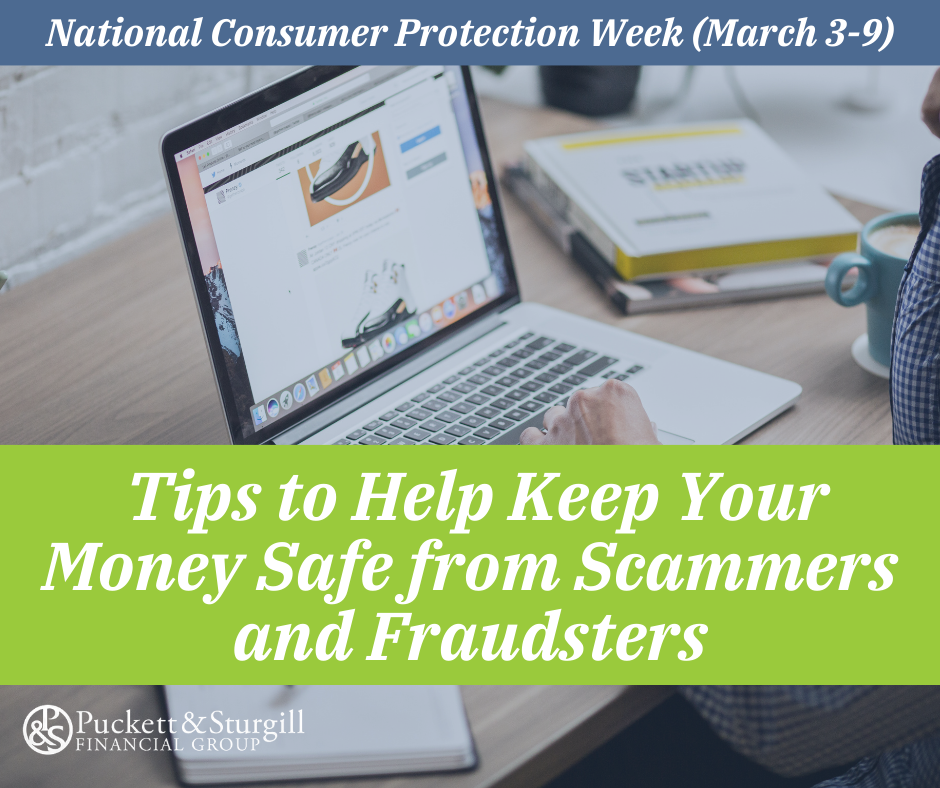
How to Keep Your Money Safe from Scammers

Technology continues to grow and evolve, allowing us to stay connected and perform many daily tasks from home. There is a drawback to technology, however. It often leaves us more vulnerable to scammers who hide behind the anonymity that technology provides and find ways to scam us out of our hard-earned money. Work towards keeping your money safe and stave off scammers by following the tips below.

1. Know How to Spot a Scammer

While some scams are apparent, others are more difficult to spot. Most scammers will claim to be from an organization familiar to you, such as the IRS, Social Security, a utility company, or a well-known charity. Many even go as far as mimicking the name of a known company or entity on your caller ID, texts, or email so that you will answer them. Other signs that you may be dealing with a scammer are them pressuring you to act immediately or asking for payment with unconventional or non-secure methods.2

2. Don't Open Emails if You Don't Recognize the Sender

Clicking links through emails is one of the easiest ways for scammers to get your personal information or direct you to a fake site for payment. If you don't recognize the sender or are unsure, you may try contacting the company directly via phone to see if they have sent the email. If an email uses a common company name, you may want to click on the name. This will show you to see the actual address the email is coming from, which will often not have the company tag at the end.1

3. Prioritize Updating Passwords Regularly

Scammers will often work by obtaining your passwords and using them to lock you out of your account, so they may use it or obtain private or financial information from you. Always be sure to choose passwords that are more difficult and take the time to update them every six months.1

4. Keep Up With Operating System and Security Updates

While it may seem like you are constantly getting requests to install updates on your electronic devices, doing them is vital. They often include security patches and updates that are designed to reduce your cyber-attack risk.2

5. Block Unknown Callers and Emails

If you receive unsolicited emails, texts, or phone calls, it may be wise to block them. By blocking them, you will be less likely to accidentally click on links that could be dangerous and also enjoy fewer useless messages.2

6. Don't Give Out Personal or Financial Information to Anyone You Did Not Request Services From

Legitimate companies will not contact you and ask for identity or financial information unless they are responding to a request from you. This means you should not provide driver's license numbers, Social Security numbers, bank account numbers, or credit card numbers unless you have initiated contact with the company.1     Important Disclosures: The opinions voiced in this material are for general information only and are not intended to provide specific advice or recommendations for any individual. All information is believed to be from reliable sources; however, LPL Financial makes no representation as to its completeness or accuracy. This article was prepared by WriterAccess. LPL Tracking #526895 Footnotes: 1 Avoiding Scams and Scammers, FDIC.gov, https://www.fdic.gov/resources/consumers/consumer-news/2021-10.html 2 How To Avoid a Scam, Consumer, FTC.gov, https://consumer.ftc.gov/articles/how-avoid-scam Sources https://www.fdic.gov/resources/consumers/consumer-news/2021-10.html https://consumer.ftc.gov/articles/how-avoid-scam

Retiring Early As a Couple: A Financial Love Story

Retiring early as a couple is a goal shared by many, and if planned comprehensively, it may provide opportunities for travel, passion projects, and more quality time together. Retiring simultaneously can bring many benefits, such as shared experiences and time together, which may result in a stronger bond. However, it is essential to note that simultaneously retiring means that the couple may stop earning money around the same time, which can impact their income and savings. For this reason, couples must have a plan outlining a systematic approach to saving, spending, and investing. It's also critical to include factors such as their individual and collective needs and goals to ensure that both partners are on the same financial page. As they work toward their goal of retiring early, they must consider these areas as they plan together to work toward their early retirement goal.

Identifying suitable account ownership

When considering the financial intricacies of retirement planning, it is crucial to remember the potential benefits of both joint and separate accounts. Many couples opt for a combination of these two types of accounts. Joint accounts are commonly used for shared expenses like utility bills, mortgages, groceries, and shared savings goals, such as joint retirement funds. Having a joint account can streamline transactions of these obligations, creating a sense of financial cohesion within the couple. Conversely, separate accounts are beneficial for maintaining individual financial independence. Separate accounts can be used for personal expenses or personal savings goals. In retiring early, having different accounts may be particularly useful when one partner must retire before the other due to health reasons or age differences.

The FIRE movement

The Financial Independence Retire Early (FIRE) movement is one approach that has been gaining popularity amongst couples aiming for early retirement. The FIRE movement advocates for intense savings and frugality to achieve financial independence and retire early; hence the name – Financial Independence, Retire Early. The principles of the FIRE movement focus on frugal living, aggressive saving, and investing in low-cost, passive funds, suggesting savings rates that can be higher than 50% of the income. The objective is to build a nest egg large enough to support living expenses without needing further employment. Implementing the FIRE movement's principles may help couples work toward their goal of early retirement.

Tips to work toward simultaneous retirement

Retiring early as a couple and striving for financial independence is attainable with careful planning and consideration of both joint and separate accounts, along with following the principles of the FIRE movement. Here are some other tips to help couples work toward their goal of retiring at the same time:
  • Follow a budget
  • Consider passive income strategies
  • Work with a financial professional
  • Maintain a healthy lifestyle
For many couples, the benefits of retiring early and simultaneously are worth considering. Each couple is unique in their financial situation and goals, and by planning accordingly, early retirement can be pursued. It all comes down to financial discipline, prudent planning, working with a financial professional, and being on the same financial wavelength with your partner.     Important Disclosures: The opinions voiced in this material are for general information only and are not intended to provide specific advice or recommendations for any individual. All information is believed to be from reliable sources; however, LPL Financial makes no representation as to its completeness or accuracy. This article was prepared by Fresh Finance. LPL Tracking #516734-04   Sources: https://www.investopedia.com/terms/f/financial-independence-retire-early-fire.asp

6 Tips for Reducing Social Security Taxes

Determining how your income impacts Social Security (SS) taxes is important for tax planning. Factors that determine how much pay SS tax you pay, depending on your circumstances, include:
  • If you have income from working in retirement.
  • If you are self-employed.
  • If you receive interest, dividends, or other taxable income.
You may pay SS tax if you:
  • File an individual federal tax return, and if your combined income is between $25,000 and $34,000, you may have to pay income tax on up to 50% of your benefits.
  • File a joint federal tax return, and you and your spouse have a combined income between $32,000 and $44,000; you may have to pay income tax on up to 50% of your benefits. If you have more than $44,000 in income, up to 85% of your benefits may be taxable.
  • Are married and file a separate tax return, you may have to pay SS taxes.
Source: SSA.gov There are strategies to help you reduce SS taxes by minimizing your adjusted gross income (AGI). Depending on your situation, you may have these options available to you:
  1. Minimize withdrawals from tax-advantaged vehicles. Withdrawals from your IRA or 401(k) will be considered income and subject to taxes. Decreasing the frequency or only taking the minimum amount, for example, the required minimum distribution (RMD), can help reduce your AGI.
  2. Keep your income below the SS tax threshold. If your AGI is under $25,000 as an individual or under $32,000 combined income when filing jointly, you may be SS tax-exempt. Due to the complexities of taxation, visit your tax professional about your situation.
  3. Use a Roth IRA conversion strategy. Roth IRAs have tax-free distributions and no RMDs. Use this strategy to convert IRAs, 401(k)s, and other tax-deferred vehicles to tax-free income in retirement. You will need to pay taxes at the rollover transfer, so you should consult your tax professional before converting your IRA, 401(k), or other tax-advantaged accounts to understand your situation.
Earnings on the Roth IRA that accumulate after the rollover will be eligible for tax-free withdrawal when the Roth IRA has been open for at least five years and you are at least 59½.
  1. Donate to charity. Your RMDs can be donated, eliminating the income from your AGI for the donation. Another strategy called a qualified charitable distribution (QCD) allows you to distribute funds from your IRA to an eligible charity (a 501(c)(3) organization) if you’re age 70 1/2 or older.
 
  1. Reduce your business income. Reducing your pass-through income by increasing business deductions and expenses can help lower SS taxes. You can maximize your retirement savings using specific strategies and lower your taxable income simultaneously. Work with your financial and tax professionals for business planning to determine which tax-saving strategies are appropriate for your situation as a business owner.
 
  1. Maximize your capital losses. If you’ve invested and lost value, you may want to sell the investment and realize the loss so you can claim it on your taxes through a tax-loss-harvesting strategy. The tax write-off may provide a deduction on your taxes. Your financial and tax professionals can help you understand how capital losses work and if you qualify.
  While there is no way to eliminate paying taxes, your financial and tax professionals can help determine strategies that may save you money depending on your circumstances. Important Disclosures The opinions voiced in this material are for general information only and are not intended to provide specific advice or recommendations for any individual. This information is not intended to be a substitute for specific individualized tax advice. We suggest that you discuss your specific tax issues with a qualified tax advisor. Contributions to a traditional IRA may be tax deductible in the contribution year, with current income tax due at withdrawal.  Withdrawals prior to age 59 ½ may result in a 10% IRS penalty tax in addition to current income tax. The Roth IRA offers tax deferral on any earnings in the account. Withdrawals from the account may be tax free, as long as they are considered qualified. Limitations and restrictions may apply. Withdrawals prior to age 59 ½ or prior to the account being opened for 5 years, whichever is later, may result in a 10% IRS penalty tax. Future tax laws can change at any time and may impact the benefits of Roth IRAs. Their tax treatment may change. Traditional IRA account owners should consider the tax ramifications, age and income restrictions in regards to executing a conversion from a Traditional IRA to a Roth IRA. The converted amount is generally subject to income taxation. All information is believed to be from reliable sources; however LPL Financial makes no representation as to its completeness or accuracy. This article was prepared by Fresh Finance. LPL Tracking # 1-05359383   Sources: https://faq.ssa.gov/en-us/Topic/article/KA-02471#:~:text=You%20must%20pay%20taxes%20on,income%E2%80%9D%20of%20more%20than%20%2432%2C000. https://www.bankrate.com/retirement/avoid-paying-taxes-on-social-security-income/#htm https://money.usnews.com/money/retirement/social-security/articles/how-to-minimize-social-security-taxes https://www.sdfoundation.org/news-events/sdf-news/new-laws-for-qcds-changes-for-cgas-and-smart-charitable-strategies-for-2023/#:~:text=Eligibility%20for%20making%20a%20QCD,liability%20for%20future%20estate%20taxes.

Why Your Credit Score Matters in Retirement

Regardless of the stage of life, your credit score is an essential component of your financial health when you're in retirement. A consistently strong credit score can pave the way for greater confidence, easy loan access, and lower interest rates. Many retirees overlook the importance of maintaining a suitable credit score after they stop working or that credit scores lose relevance in retirement. Yet, nothing could be further from the truth. Here's a detailed look at why your credit score matters in retirement.

To Maintain Your Ability to Seek Credit

Retirement does not equate to financial inactivity. Even though you may no longer earn a regular paycheck, you may still engage in financial transactions requiring a credit check. For instance, if you plan to refinance your mortgage to a lower rate, lenders may consider your credit score part of the qualification process. If your score is low, you might be denied the mortgage or offered a higher interest rate mortgage.

To Find Housing

In addition, retirees often consider downsizing their homes, moving to senior living communities, or relocating to different states or countries. Any of these scenarios might necessitate applying for a new mortgage, a process that, once again, requires a solid credit score. Additionally, vacation home landlords often conduct credit checks before renting their property. A poor credit score can limit your options or cause you to lose out on your preferred vacation destination property.

Money for emergencies

Another reason your credit score matters in retirement is the possibility of unexpected expenses. Life is inherently unpredictable, and even in retirement, unforeseen costs can arise. These costs could be due to health complications, housing repairs, or helping a family member financially. In line with these circumstances, having good credit can make borrowing money more accessible.

New Opportunities

Retirees may also want to explore new ventures, like starting a business. Credit scores significantly impact the credit terms under which one can borrow capital to launch a business. An excellent credit score can make acquiring a loan less costly and more accessible. On the contrary, a low credit score could lead to onerous loan terms or a loan denial.

Suitable Insurance Rates

Furthermore, some insurance companies use credit-based insurance scores to determine risk factors and premiums for auto and homeowner's insurance policies. A poor credit score might cause retirees to pay a higher premium or, worse still, reject their policy application outright.

Tip to Maintain Good Credit

A good credit score is essential to your overall financial health. Lenders, landlords, utility companies, and insurance companies use credit scores to evaluate your reliability. Here are some tips retirees can use to help maintain good credit. Tip #1- Pay bills on time. The first and most significant tip for maintaining good credit is ensuring your bills are paid on time. Delayed or missed payments can negatively affect your credit score. Tip #2- Maintain low or no credit card balances. The proverb "the less, the better" holds significance regarding credit card balances. Keeping your credit card balances low and not revolving is essential, and a lower percentage of credit use (below 30%) is positive. Maxing out your credit cards or maintaining high balances can negatively impact your credit. Tip #3- Open new credit accounts only as needed. While having a mix of credit types – such as credit cards, car loans, or mortgages – can help your credit score, it's important not to open too many accounts in a short period. Tip #4- Regularly check your credit reports. Proactive credit report monitoring is vital, especially regarding credit scores. Regular credit report checks are instrumental in maintaining good credit. It helps to promptly identify any inaccuracies or fraud that could harm your credit. Tip #5- Keep old credit accounts open. The length of your credit history is another factor influencing your credit score. If you close an old credit account, you shorten your credit history, which could hurt your score. Tip #6- Negotiate with creditors if necessary. If you've missed payments and your credit score has taken a negative turn, contact your creditors and negotiate to remove the negative information. Tip #7- Diversify your credit. Having a diversity of credit types, such as a mix of installment loans, retail accounts, credit cards, and mortgage loans – can positively impact your credit score. Credit diversity demonstrates to potential creditors that you can responsibly handle different types of credit. Tip #8- Seek professional help. If you are overwhelmed with managing credit or have already slipped into a bad credit score, seeking professional help could be appropriate. Credit counseling agencies can provide invaluable assistance in rebuilding your credit score. Your financial professional can also be a source of help in providing recommendations based on your situation. In conclusion, maintaining a suitable credit score is indispensable in your financial life, even throughout retirement. Retirees must focus on maintaining an excellent credit score to provide them with financial independence in their golden years.     Important Disclosures: The opinions voiced in this material are for general information only and are not intended to provide specific advice or recommendations for any individual. All information is believed to be from reliable sources; however, LPL Financial makes no representation as to its completeness or accuracy. This article was prepared by Fresh Finance. LPL Tracking #527484 Sources: https://www.aarp.org/money/credit-loans-debt/info-2022/retirement-and-your-credit-score.html https://www.credit.com/blog/credit-score-during-retirement/  

SECURE Act 2.0: What Business Owners Need to Know for 2024

The Setting Every Community Up for Retirement Enhancement (SECURE) Act, passed into law in December 2019, had significant implications for business owners and employees regarding retirement savings and tax rules.   With some of SECURE Act 2.0's provisions starting in 2024, business owners must know how it may impact their situation. SECURE Act 2.0 features a host of potential changes for 2024, including adjustments to RMD rules, auto-enrollment retirement plans, changes to catch-up contribution rules, increased annuity options, and other new provisions to help employees pursue financial independence. Here are the details of each provision to remain compliant with the Act.  

1. Adjustments to Required Minimum Distributions (RMDs)

The SECURE Act 2.0 would amend the required minimum distributions (RMDs) rules. Under the original SECURE Act, the age at which individuals had to start taking RMDs from their retirement accounts increased from 70 ½ to 72. SECURE Act 2.0 further extends this age to 73, beginning in 2024. This amendment impacts retirement plans and obligations concerning employee retirement benefits and the new RMD age. 2. Auto-enrollment in 401(k) plans Starting in 2024, the SECURE Act 2.0 proposes that employers automatically enroll their employees in their 401(k) plan. While employees can opt out, the objective is to encourage more employees to save for retirement. Additionally, employers must establish efficient systems for automatic enrollment and provide clear information to their employees about this change. 3. Amendments to catch-up contribution rules The SECURE Act 2.0 also proposes that employees aged 50 and older can make additional catch-up contributions of up to $7500 into their employer-sponsored retirement savings plan. Employers must adjust their retirement plan terms to account for this change and educate their employees about the new rules. 4. Increased annuity options The SECURE Act 2.0 also includes provisions to increase annuity options within individual retirement accounts (IRAs) and 401(k) plans. This development aims to give retirees an income stream during their retirement years through the annuity option within their retirement account. Business owners must familiarize themselves with new annuity options and potentially roll out new retirement plans or update their plan's strategies to include additional annuity options in early 2024.

5. New Roth 401(k) RMD rules

Participants in a Roth 401(k) no longer need to take required minimum distributions (RMDs), which conforms to the rule that already applies to Roth IRA account owners.

6. Employee student debt relief

Employers can now offer student debt relief through workplace retirement plans, such as 401(k)s, by matching contributions toward an employee's student loan repayments. The employee elects the employer to match their loan versus their employer-sponsored retirement savings plan. However, the employee must continue participating in the employer-sponsored retirement plan to receive the employer’s match toward their student debt.

7. Employee emergencies and savings accounts

Emergency funds provision

Starting in 2024, employees can withdraw up to $1,000 penalty-free from IRAs or 401(k)s for emergencies, regardless of whether the person has reached age 59½.

Emergency savings accounts

Emergency savings accounts within retirement plans can now be offered to employees who contribute (on an after-tax basis) to that account within the retirement savings plan. However, a participant's emergency savings account balance may only be $2,500 at most.

Domestic violence provision

Employees under age 59 ½ who are experiencing domestic violence can take up to $10,000 from their IRAs or 401(k)s without paying the 10% penalty. With the SECURE Act 2.0 in view for 2024, business owners must prepare for and implement the above provisions. Business owners must understand the implications of these changes, educate their employees accordingly, and adjust their retirement plan documents to ensure they comply or face penalties at tax time.

8. Roth IRA employer contributions

Traditionally, employer matches are made with pre-tax dollars that go into an employee’s pre-tax account, such as a traditional 401(k). Starting in 2024, employers can make matching contributions into an employee’s Roth 401(k), where the monies will grow tax-free, with tax-free distributions in retirement. This new provision is optional, and employers may still elect to make pre-tax matches. The proposed SECURE Act 2.0 is still a work in progress and will change in the coming years. Therefore, business owners are encouraged to update their retirement savings plan based on the above provisions for 2024 and work toward more provisions rolling out through 2033. Business owners must work with financial and tax professionals and their retirement plan sponsors to remain informed and prepared for each new year’s SECURE Act 2.0 provision rollout through 2033. In summary, the SECURE Act 2.0 solidifies the need for business owners to prepare for its implications. By understanding the new adjustments to RMDs, auto-enrollment, amendments to catch-up contributions, and the increase in annuity options, business owners can ensure that they comply and that their employees are suitably prepared for a comprehensive retirement.     Sources: https://www.kiplinger.com/taxes/tax-planning/secure-20-retirement-savings-changes https://www.natlawreview.com/article/secure-20-series-part-3-retirement-plan-required-minimum-distribution-age-to https://time.com/personal-finance/article/what-is-the-secure-act-2-0/     Important Disclosures Content in this material is for educational and general information only and not intended to provide specific advice or recommendations for any individual. This information is not intended to be a substitute for individualized legal advice. Please consult your legal advisor regarding your specific situation. All information is believed to be from reliable sources; however, LPL Financial makes no representation as to its completeness or accuracy. This article was prepared by Fresh Finance. LPL Tracking #521665  

How Portfolio Diversification Can Be Sweet Like a Box of Chocolates

In the world of investing, risk and reward go hand-in-hand. To help manage risk and reward, investors often utilize a portfolio diversification strategy that mitigates risk while working toward accumulation across asset classes. Diversification mitigates the potential for unsavory pitfalls while offering a variety of suitable outcomes. In this article, we explore portfolio diversification by using concepts related to chocolate to make it more understandable – and palatable.

An assortment of chocolates and asset classes

When tasting different chocolate flavors, one may revel in the variety of experiences each offers. Some might prioritize white chocolate for its creamy sweetness, while others find the aromatic bitterness of dark chocolate satisfying. Like chocolate tastings, investment portfolios inherently cater to personal preferences. Each investor has goals, objectives, risk tolerance, and time horizon. Portfolio diversification helps tailor these individual tastes to their portfolio's holdings. Much like a box of assorted chocolates, equities, bonds, real estate, commodities, private investments, and other asset types may be included in the portfolio. Each asset type behaves differently under various market conditions, just like every chocolate provides a different flavor profile. Finding the right mix of different investment types can generate optimal results.  

Balancing chocolate flavors

Similar to how chocolates have varying balances of sugar, cocoa, milk, and other ingredients, allocating investments in a portfolio also requires a balance. Too much emphasis on a single asset class can expose the portfolio to unnecessary, concentrated risk – just like consuming excessive amounts of a single type of chocolate may become less enjoyable or lead to negative impacts. By contrast, a diversified portfolio containing various investment types works together to pursue a consistent overall return. Like the chocolate connoisseur who consistently updates their chocolate selections, investors must frequently review, rebalance, and adjust their portfolios. The capital markets never remain the same; as some investments become less attractive or risky, investors must adapt their portfolio asset mix in response to these changes.  

Cocoa bean and investment strategy origins

  In the chocolate world, the cocoa beans' origins can come from different parts of the world: Africa, Central America, and South America. Each region produces cocoa beans that add a distinct flavor to the chocolate, enriching the overall experience. Similarly, a diversified portfolio containing investment strategies across different geographies and economies may offer growth opportunities and manage risk. Investors must work with their financial professionals to determine if foreign investments are suitable for their situation. In conclusion, portfolio diversification can be as sweet as a box of assorted chocolates. Diversification enables investors to spread risk across different investments and asset classes based on individual risk tolerance, goals, and time horizons. Finding a suitable investment mix can be satisfying, just like the joy of discovering your favorite piece of chocolate in a chocolate box.     Important Disclosures: The opinions voiced in this material are for general information only and are not intended to provide specific advice or recommendations for any individual. To determine which investment(s) may be appropriate for you, consult your financial professional prior to investing. Investing involves risks including possible loss of principal. No investment strategy or risk management technique can guarantee return or eliminate risk in all market environments. There is no guarantee that a diversified portfolio will enhance overall returns or outperform a non-diversified portfolio. Diversification does not protect against market risk. This article was prepared by Fresh Finance. LPL Tracking #516734-03

The Importance of Business Credit and How to Build It

Credit is one of the most important factors of life that impacts all businesses. Having solid credit is necessary for securing a small business loan. Most lenders consider an acceptable business credit score of 75. The U.S. Small Business Administration published a study by the Native American Dream Gap which disclosed that 45% of small business owners surveyed didn’t know they had a business credit score, 72% didn’t know where to locate the information, and 82% didn’t know how to interpret their score. Taking steps to build business credit can offer your business opportunities that wouldn’t be available to otherwise. The importance of building credit can’t be overstated. Here are a few strategies to consider to help build it:

Register your business

Registering your business establishes it as its own legal entity and provides better access to securing loans from banks and capital, which you can use to build business credit. Along with building a solid business credit score, registering your business also offers legal and tax benefits and helps you mitigate personal liability suits brought against you from any business dealings.  

Open a business bank account

A business bank account can help to build a relationship and track record with the bank. This can be beneficial when you apply for a business credit card or a loan. Being an existing customer may help you to build your business credit.  

Apply for a business credit card

Having a business credit card helps to establish your business’s credibility. If the payments are made on time, that also helps build your business credit and acquire a higher score. A business credit card also works to improve business cash flow and to obtain higher credit limits over time.  

Borrow from lenders that report the payments to the business credit bureaus

Borrowing from lenders that report the payments to the major credit bureaus is beneficial as it helps to raise your business credit score and develops your creditworthiness.  

Establish credit with suppliers and vendors

A quick way to build business credit is by applying for net terms with suppliers and vendors. For example, net 30 accounts allow you to buy now and pay later. The accounts extend you 30 days to pay in full after purchasing of a product. This type of practice is known as supplier credit, vendor credit, and trade credit. Suppliers and vendors then, in turn, report the payments made to the three major credit agencies, helping your company build a strong business credit score.  

Regularly monitor your business credit report

There are three major credit reporting agencies, each compiling data about businesses, and it is essential to monitor your company’s credit report to ensure the information is accurate. The credit agencies allow you to update general information about your business. Sometimes, incorrect or outdated information makes its way onto your credit file, and you would want to contact the credit agency to dispute the information and request a revision to your report.  

Consult a financial professional

Consider consulting a financial professional with experience in building business credit who can teach you strategies to raise your business's credit score while also providing guidance on creating manageable goals and financial projections based on decisions you make now.     Important Disclosures: The opinions voiced in this material are for general information only and are not intended to provide specific advice or recommendations for any individual. This information is not intended to be a substitute for specific individualized tax or legal advice. We suggest that you discuss your specific situation with a qualified tax or legal advisor. All information is believed to be from reliable sources; however, LPL Financial makes no representation as to its completeness or accuracy.   Sources: How to Build Business Credit Quickly: 5 Simple Steps | U.S. Small Business Administration (sba.gov) What Are The Benefits Of A Business Credit Card? – Forbes Advisor Consumer reporting companies | Consumer Financial Protection Bureau (consumerfinance.gov) 6 Benefits of a Business Bank Account - NerdWallet UK 5 Reasons You NEED to Register Your Business. (linkedin.com)   This article was prepared by LPL Financial   LPL Tracking # 523055  

4 Pre-Medicare Strategies for Managing Healthcare Costs

Planning for early retirement is great, but planning for healthcare coverage at the same time is sometimes more difficult. Healthcare costs are high, and finding ways to bridge the gap between the age you retire and the time you are eligible for Medicare may take a lot of planning. If you are close to your desired retirement age but are still a little ways off from Medicare eligibility, below are a few strategies for navigating healthcare costs during that gap period.

1. Consider COBRA Coverage

Under the Consolidated Omnibus Budget Reconciliation Act of 1985, you may be able to continue your employer-sponsored healthcare coverage for 18 months or longer. To continue the coverage, you must elect COBRA and pay the premiums plus an additional 2% fee. Depending on the type of coverage, this may be pricey, but if you have health conditions that require regular treatment or care, it may be one of the better options.1

2. Look at Your Spouse's Insurance Coverage

If your spouse has not yet retired and they have coverage available through their employer, the most cost-effective option might be adding yourself to their policy. Losing your previous medical coverage will act as a qualifying event, allowing you to go onto a spouse's policy even if it is outside the open enrollment period. It is important to consider the costs, deductibles, and co-insurance to ensure the option will provide you with the coverage you need.1

3. Research Private Insurance Companies

You also have the option of using private healthcare coverage through a local insurance agent or professional organization to secure the coverage you need to bridge the gap. When looking into private healthcare, you will be able to choose from varying coverage options and costs to build a plan to fit your healthcare needs. The main drawback is that these policies are often more expensive than other options if you are looking for lower deductibles and out-of-pocket costs.1

4. Price Coverage on the Public Marketplace

Before getting new insurance, you may want to price different coverage options on the public marketplace. If you are not eligible for Medicare, you are eligible for healthcare coverage in the public marketplace and will not be denied even if you have a previous medical condition. The coverage cost and types of coverage will vary greatly from plan to plan, which gives you many options to find the coverage you need that will be able to be worked into your budget.1 While it is critical to plan for healthcare coverage from the time you retire until you are Medicare-eligible, it is just as critical to be prepared for when you need to apply for Medicare. Ensure you are aware of all the information you need, documentation, and deadlines you will need to follow so you don't incur any penalties or lapses in coverage.     Important Disclosures: The opinions voiced in this material are for general information only and are not intended to provide specific advice or recommendations for any individual. All information is believed to be from reliable sources; however, LPL Financial makes no representation as to its completeness or accuracy. This article was prepared by WriterAccess. LPL Tracking #516245-01 Footnotes: 1 Managing Healthcare Costs, CMS.gov, https://www.cms.gov/about-cms/agency-information/omh/downloads/c2c-manage-your-healthcare-costs-508.pdf Sources https://www.cms.gov/about-cms/agency-information/omh/downloads/c2c-manage-your-healthcare-costs-508.pdf  

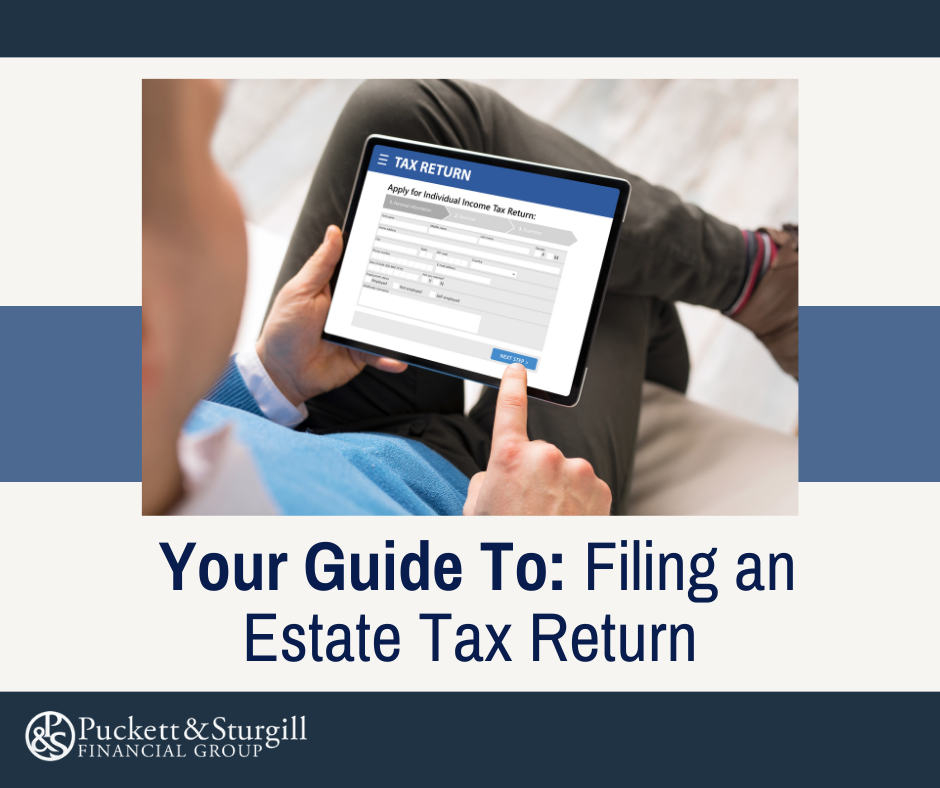
Filing an Estate Tax Return

What is an estate tax return?

When you die, you will leave behind all your property (everything you own) and debts (everything you owe). All this is called your estate. After the debts have been paid, the various items left in your estate will be transferred to your heirs and beneficiaries, but first the federal government will take its share through estate taxes (gift and estate tax and generation-skipping transfer tax). The personal representative of your estate must file an estate tax return with the IRS if the value of your gross estate at death together with the value of all taxable gifts you made during life is more than a certain amount ($12,060,000 plus any deceased spousal unused exclusion amount in 2022). The federal estate tax return (Form 706) lets the IRS know how the estate taxes are calculated and how much tax is owed. Generally, the estate tax return must be filed within nine months after your death, but an automatic six-month extension is available if Form 4768 is filed on or before the due date for filing Form 706. An additional six months may be granted for good cause shown. The late filing penalty is 5 percent of the taxes due per month, up to 25 percent. This is in addition to any late payment penalty. An estate tax return may also need to be filed with your state. This discussion focuses on the federal return only. Contact your state for information regarding its state death taxes. Caution: The Tax Relief, Unemployment Insurance Reauthorization, and Job Creation Act introduced a new portability feature, which allows a surviving spouse to take advantage of the unused applicable exclusion amount of a predeceased spouse who died after December 31, 2010. Normally an estate valued at less than the available exclusion amount would not be required to file an estate tax return; however, a return will now be necessary for nontaxable estates in order to record the amount of a decedent's unused exclusion amount for a surviving spouse who may want to use it later. Tip: If you are the owner of a closely held business, your personal representative may be able to defer payment of estate taxes owed on that interest for up to 15 years.

How do you calculate estate tax liability?

Calculating estate taxes is similar to calculating income taxes. It is basically a four-step process:
  • Determine what is taxable
  • Determine what isn't taxable
  • Calculate the tentative estate tax
  • Subtract allowable credits from the tentative tax The calculation looks something like this:
 Gross Estate (reduced by qualified conservation easement exclusion)
-Funeral and administration expenses, claims and losses, charitable transfers, marital transfers, and state death taxes
=Taxable estate
+Adjusted taxable gifts
=Cumulative taxable transfers
 Tax on cumulative taxable transfers
-Gift tax payable on adjusted taxable gifts (as reduced by unified credit)
=Tentative tax
-The unified credit (or applicable credit amount), pre-1977 gift tax credit, foreign death tax credit, and credit for tax on prior transfers
=Final estate taxes payable

How do you file an estate tax return?

The following explains how to fill out Form 706, United States Estate (and Generation-Skipping Transfer) Tax Return and the various attachments. Caution: This discussion here is for information purposes only. Do not attempt to complete an estate tax return based solely on the information provided here. Please consult Form 706 and the instructions to Form 706 for further information. You may also wish to consult an attorney or tax professional before filing an estate tax return. Part 1 — Decedent and Executor This section is looking for identifying information about the decedent, including name, Social Security number, domicile at time of death, year domicile was established, date of birth, and date of death. The executor's or administrator's name, address, and Social Security number must also be supplied. Additional questions ask whether the decedent left a will, the name and location of the court where the will was probated or the estate was administered, and the case number. Part 2 — Tax Computation This section is completed last as it contains information from other sections of the return and the applicable Schedules. After adding adjusted taxable gifts and subtracting allowable deductions from the gross estate, you will calculate a tentative tax (or gross estate tax). The estate taxes will then be reduced by available credits. When all the calculations are complete, the number on the bottom line of this section is what the estate owes the IRS. Part 3 — Elections by the Executor Generally, the value of your gross estate is the fair market value of all property on the date of your death. However, if your estate qualifies, your personal representative may elect the alternate valuation date that allows the gross estate to be valued six months after the date of death or on the date an asset is disposed of, whichever is earlier. The purpose of the alternate valuation date is to permit a reduction of the tax liability if the value of the estate's property has decreased since the date of death. Special use valuation may also be available for certain farm and closely held business real property. This election allows the property to be valued at its actual value, rather than at its fair market value. Certain other elections may be made on this part of the form as well. Part 4 — General Information This section includes information about the decedent's occupation and marital status, along with information about the surviving spouse and the beneficiaries of the estate, such as children and grandchildren. There are also questions about whether gift tax returns have been filed and what types of property were owned by the decedent. Part 5 — Recapitulation This is the section where the gross estate and allowable deductions are calculated. Totals from various schedules are entered to make this calculation. Every line must be filled in, even if the entry is 0. Do not enter anything in the Alternate Value column unless the alternate valuation date is elected. Attach the appropriate Schedule for each item in Part 5. Part 6 — Portability of Deceased Spousal Unused Exclusion Amount (DSUEA) An election to transfer the unused applicable exclusion amount of the decedent to the surviving spouse can be made here. Also, the DSUEA received by the decedent from a predeceased spouse and applied against lifetime gifts are listed and a total calculated in Part 6. Schedule A — Real Estate Provide the address and legal description of all real estate owned by the decedent. If the estate is liable for a mortgage, report the full value of the property in the value column without subtracting the mortgage liability. Show the amount of the mortgage in the description column. The amount of the unpaid mortgage is subtracted on Schedule K. Schedule B — Stocks and Bonds Report all stocks and bonds owned by the decedent, including the face amount of bonds, number of shares of stock, unit value, and value as of the date of death (or alternate valuation date, if elected). Schedule C — Mortgages, Notes, and Cash Use Schedule C to report mortgages, promissory notes, and cash items held by the decedent at the time of death. Include a description of each item (e.g., the amount of a mortgage, its unpaid balance and the origination date, the borrower and the lender, the location of the mortgaged property, the interest rate). Cash on hand should be reported, as well as the balances of any checking or savings accounts held by the decedent. Schedule D — Insurance on the Decedent's Life Schedule D must be completed if there is insurance on the decedent's life, regardless of whether it is included in the gross estate. If the decedent possessed any incidents of ownership at death, those policies must be reported, whether the proceeds are payable to the estate (or for the benefit of the estate) or to any other beneficiary. Schedule E — Jointly Owned Property All jointly owned property must be reported on Schedule E, regardless of whether the property is included in the gross estate. For the purposes of this form, jointly owned property includes property of any type in which the decedent held an interest as a joint tenant with right of survivorship or as a tenant by the entirety. Schedule F — Other Miscellaneous Property Schedule F covers all property included in the gross estate that is not listed elsewhere, such as tangible personal property, business interests, and insurance on the life of another. This schedule must be attached, even if there is no miscellaneous property to report, because it contains questions that must be answered about art, collectibles, bonuses, awards, and safe deposit boxes. Schedule G — Transfers during Decedent's Life The following transfers should be reported on Schedule G:
  • Gift taxes paid on gifts made by the decedent or the decedent's spouse within three years before death
  • Transfer of life insurance policies made within three years before death
  • Transfer of life estate, reversionary interest, or power to revoke within three years before death
  • Transfers with retained life estate where the decedent retains the right to designate a beneficiary of the property transferred
  • Transfers taking effect at death
  • Revocable transfers
Schedule H — Powers of Appointment If the decedent possessed any powers of appointment, Schedule H must be completed. A power of appointment means that you have the power to determine who will own or enjoy the property subject to the power. The power must be created by someone other than the decedent. If you answered Yes to line 13 of Part 4, then General Information, Schedule H must also be completed. Schedule I — Annuities Annuities owned by the decedent are reported on Schedule I. Any annuity must be included in the gross estate if it meets the following requirements:
  • It is receivable by a beneficiary following the death of the decedent by virtue of surviving the decedent
  • It is under contract or agreement entered into after March 3, 1931
  • It was payable to the decedent, either alone or in conjunction with another, for the decedent's life, or a period not ascertainable without reference to the decedent's death, or for a period that did not end before the decedent's death
  • The contract or agreement is not an insurance policy on the life of the decedent
Many retirement plan benefits constitute annuities, and Schedule I is the proper place to list these benefits. Schedule J — Funeral Expenses and Expenses Incurred in Administering Property Subject to Claims Various deductible expenses and fees associated with managing the estate are itemized on Schedule J. Items to be reported on this form include funeral expenses, executor's fees, attorney's fees, certain interest expenses incurred after the decedent's death, and miscellaneous expenses incurred in preserving and administering the estate. Schedule K — Debts of the Decedent, and Mortgages and Liens Debts of the decedent on the date of death are deducted on Schedule K. Debts of the estate incurred after the date of death are not reported on Schedule K. Schedule L — Net Losses during Administration and Expenses Incurred in Administering Property Not Subject to Claims Losses that will not be claimed on a federal income tax return are itemized on Schedule L. These items include losses from thefts, fires, storms, shipwrecks, or other casualties that occurred during the settlement of the estate. Expenses other than those listed on Schedule J are also reported on Schedule L, whether these expenses are estimated, agreed upon, or paid. Schedule M — Bequests, etc., to Surviving Spouse Property interests passing to the surviving spouse are reported on Schedule M. This item includes property interests the spouse receives by any of the following methods.
  • As the decedent's heir, donee, legatee, or devisee
  • As the decedent's surviving joint tenant or tenant by the entirety
  • As beneficiary of life insurance on the decedent's life
  • Under dower or curtesy or similar statute
  • As a transferee of a transfer made by the decedent at any time
  • As beneficiary of a trust created and funded by the decedent, provided the trust contains certain specified provisions for the spouse
Only property that is included in the decedent's gross estate can be claimed as a deduction using Schedule M. Schedule O — Charitable, Public, and Similar Gifts and Bequests Charitable gifts deducted from the gross estate are itemized on Schedule O. You must also provide a statement that shows the values of all legacies and devises for both charitable and noncharitable use, the date of birth of all life tenants or annuitants, a statement showing the value of all property that is included in the gross estate but does not pass under the will, and any other important information. Schedule P — Credit for Foreign Death Taxes If death taxes are being paid to any foreign country, these amounts must be reported on Schedule P to claim a credit against the gross estate. All amounts paid or to be paid for foreign death taxes must be entered in United States currency. Schedule Q — Credit for Tax on Prior Transfers If the decedent received property from a transferor who died within 10 years before or 2 years after the decedent, a partial credit is allowable for the taxes paid by the transferor's estate. This credit is calculated using Schedule Q. Schedule R — Generation-Skipping Transfer (GST) Tax Schedule R is used to calculate the generation-skipping transfer (GST) tax that is payable by the estate. GST tax is typically imposed on property transferred to an individual who is two or more generations below the decedent. For purposes of Form 706, property interests being transferred must be includable in the gross estate before they are subject to the GST tax. Schedule U — Qualified Conservation Easement Exclusion A portion of the value of land that is subject to a qualified conservation easement may be excluded from a decedent's gross estate. Schedule U is used to make this election. Schedule PC — Protective Claim for Refund Schedule PC can be used to preserve the estate's right to claim a refund based on the amount of an unresolved claim or expense that may not become deductible under Section 2053 until after the limitation period ends.

Where can you get help filing an estate tax return?

There are many professionals who can assist you in filing an estate tax return, including your attorney, your tax professional, or your financial advisor. In addition, there are now software products designed to guide you through the process of filling out an estate tax return.   Important Disclosures:  Content in this material is for general information only and not intended to provide specific advice or recommendations for any individual. All performance referenced is historical and is no guarantee of future results. All indices are unmanaged and may not be invested into directly. The information provided is not intended to be a substitute for specific individualized tax planning or legal advice. We suggest that you consult with a qualified tax or legal professional. LPL Financial Representatives offer access to Trust Services through The Private Trust Company N.A., an affiliate of LPL Financial. This article was prepared by Broadridge. LPL Tracking #1-05139754