What Should Grandparents Know About 529 Savings Accounts?

Grandparents can often find themselves in a better financial position to save for their grandchildren’s education than their own children are. The parents of prospective students may still be contending with competing priorities like their own student loans, high-interest credit card debt, or a hefty mortgage. One way to help save for a grandchild’s college education is by contributing money to a 529 savings account, an account where funds can be saved or invested and are withdrawn to be used exclusively for college-related expenses.[1] What else should grandparents know about 529 college savings accounts? Grandparent-Held 529 Accounts Won’t Increase the Expected Family Contribution Every family who fills out the Free Application for Federal Student Aid (FAFSA) receives an “expected family contribution” (EFC) calculation. The EFC is designed to measure how much the family can afford to pay per year for the child’s college education; the lower the EFC, the more need-based aid may be available. While parent-held 529 college savings accounts will count as an asset for EFC purposes, grandparent-held 529 accounts don’t; this may allow the child to be eligible for more financial aid than they would be if the account was held by a parent.1 An Income Tax Deduction May Be Available More than 30 states (and the District of Columbia) offer a state income tax deduction or credit for contributions to a 529 account (even one that is owned by someone else, such as the child’s parent).2 This means that if a grandparent contributes $5,000 to their grandchild’s 529 in a given tax year, they can receive a tax credit of anywhere from a few hundred dollars to $1,000 or more, depending on the state’s tax treatment. For

Read More »

10 Tips for Small Business Owners

Small business owners should conduct an annual assessment of their personal finances. Owners of small businesses have much the same concerns as everyone else, except they are personally responsible for the fortunes of their enterprise. In a sense, a small business is like a family. And these are important families in American economic life. After all, small business is vital to the U.S. economy, employing half of private-sector workers and creating two-thirds of net new jobs, according to federal data. Here are 10 tips to follow in weighing a small business owner’s financial plan: Budget/Saving. The general financial planning rule is that you should save AT LEAST 10% of your income on an annual basis. You should also review short-term and long-term goals to ensure you are saving enough to meet your objectives. Maximize Contributions to Retirement Plans. Depending on the size of the company and number of employees, there are many different methods to save for retirement. On an annual basis, business owners should work with their accountants and financial professionals to determine the most appropriate savings vehicle. Retirement plans include: 401(k)s, individual 401(k)s, individual retirement accounts, Simplified Employee Pension (SEP) IRAs, Roth IRAs, defined benefit and defined contribution plans. This will not only help achieve the goal of saving 10% of your income, but it also can help minimize taxes. Create/Review Estate Planning Documents. It is important to create wills, living wills, medical and financial power of attorney documents. These documents should be reviewed annually as your personal goals and estate laws change. Life Insurance. Various types of life insurance are available, including whole life, variable life, universal life, universal variable life and term policies. They provide a

Read More »

4 Reasons to Consider a Life Insurance Policy

Buying a life insurance policy is something that many people push off, sometimes until it is too late. For many people, the thought of buying life insurance means thinking about their death, which is something that most people wish to avoid. Life insurance is not about death, but instead about the future and security of your loved ones. If you have not yet made the jump to purchase your life insurance policy, below are four reasons you should consider one.[1] It Assists With Your Income If your family members are dependent on the income that you bring to the household, a sudden loss of it may add intense stress to their grief. Life insurance can typically cover your income at least long enough for your loved ones to gain stability or make up for the loss of monthly funds.[2] It Will Help With Funeral Expenses Funeral arrangements can cost thousands of dollars for even simple services. Your life insurance policy may help your loved ones to cover these expenses without placing any extra financial burden on them.[3] It Will Help With Your Debt There is a common misconception that all your debt will be erased in the event of your death. While this may be true for some debts, it is not true for all; most of the time, it tends to not be true of the largest debts like anything left to pay on a home. If you have a spouse for is a co-signer on your mortgages or other loans, they may become responsible for the entire debt. Debtors may also come after the assets in your estate, which can significantly reduce the amount of estate that will

Read More »

Key Considerations as You Start Receiving Social Security Benefits

As your retirement draws closer, you will probably start to have lots of questions such as: How much Social Security will I receive? When should I retire? How will I know when to retire? Do I have enough saved? What will I need to do to maintain health insurance after I retire? The answers to these questions can vary widely depending on your income, your job duties, and your assets. However, there are a few factors that everyone should keep in mind when you begin making your retirement decisions. Keep reading to learn more about three key considerations relating to your future Social Security benefits. Your Full Retirement Age (FRA) If, like many, you are planning to rely on Social Security benefits as a key component of your retirement income, your FRA may dictate your retirement age. Those born in 1954 and earlier can reach FRA at age 66, while those born 1960 and after will not reach FRA until age 67.1 Claiming your Social Security benefits before you reach FRA will lower your monthly benefit for life, so it’s not a decision that should be entered into lightly. If you like your job and can keep it through your FRA, it may make sense to do so. Not only will it increase your monthly retirement benefit, but it will also provide you with a longer earnings history and allow you to save more and/or pay off debt before you retire. Your Health and Projected Lifespan Your decision on when to retire (and when to begin claiming Social Security retirement benefits) can often depend on how long you expect to receive these benefits. If you have a family history of longevity,

Read More »

Retirement Planning: To Roth or Not to Roth?

When saving for retirement, it often makes sense to contribute to employer-sponsored retirement plans to take advantage of any available employer match opportunities. However, not everyone has access to an employer-sponsored plan. Even if you do, there are reasons you may want to consider using Traditional and/or Roth IRAs to supplement your retirement savings. There are important differences between the two types of accounts.[i] Understanding the potential benefits and drawbacks of each type of IRA can help you make more informed decisions. Potential Benefits and Considerations Regardless which type of IRA you choose, the contribution limits are the same, although Roth IRAs contributions are subject to income limits.[ii] Traditional IRA contributions are not limited by income levels unless you or a spouse was covered by an employer-sponsored plan during the year of the contribution. In 2021, the total amount you can contribute to your Traditional and Roth IRA accounts is the lesser of your taxable compensation for the year or $6,000 ($7,000 for those age 50 or older.)[iii] However, there are important differences in tax treatment for these accounts. If your income is below certain thresholds, you may be able to deduct some or all of your contributions to traditional IRAs, reducing your taxable income in the year of the contributions.[iv] Taxes on contributions and any growth are deferred until you begin withdrawing them. So, if your tax bracket in retirement is lower than in your earning years, you may pay less in taxes on your retirement dollars. In contrast, you cannot deduct contributions to a Roth IRA – those are after-tax contributions.[v] However, qualified distributions from Roth IRAs are not subject to federal income taxes, potentially lowering your tax

Read More »

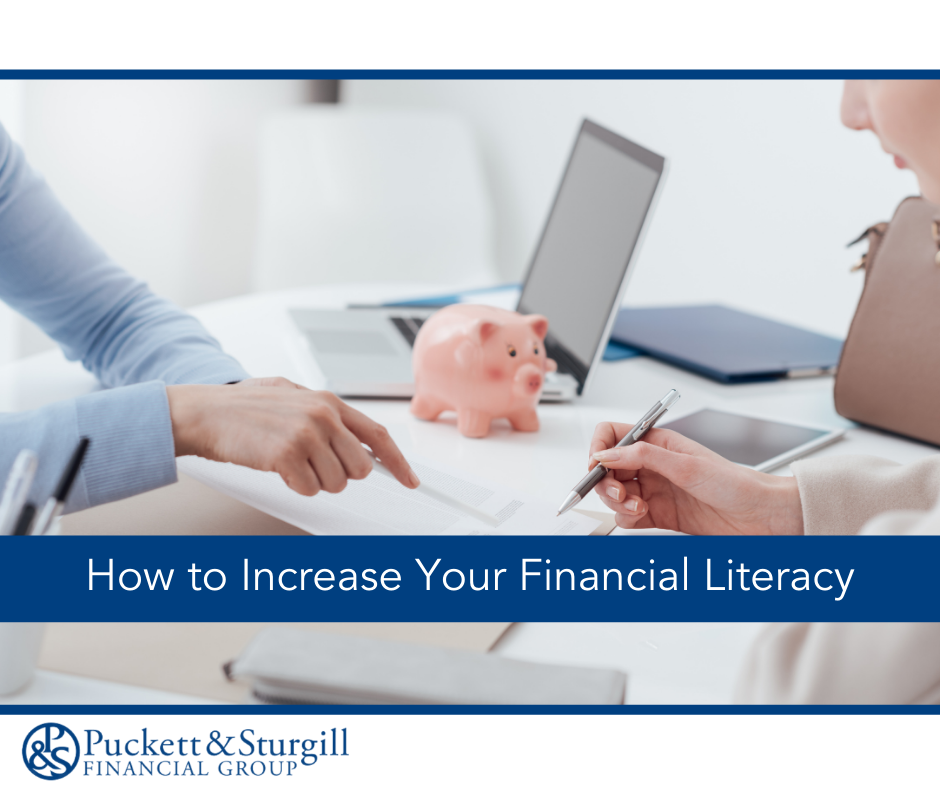
How to Increase Your Financial Literacy

Unlike verbal literacy, financial literacy isn’t often taught in schools—which means that many people may enter adulthood without having all the tools they need to make informed and effective financial decisions.[1] Fortunately, gaining financial literacy doesn’t need to be a long or complicated process. Read on for three simple things you can do to work toward increasing your financial literacy. Subscribe to Reputable Financial Publications and Newsletters As with just about any topic, the more you read about investing, budgeting, and analyzing financial strategies, the larger your base of knowledge will be. A strong knowledge base in a particular subject can make it easier to make wise decisions in the future—you should already have a good feel for the “do’s” and “don’ts” of certain financial questions. There are a variety of high-quality financial publications, newsletters, and daily digests that can be emailed to you for free. You can also opt to become a paying member of one or more financial websites in order to get advice that’s better tailored to your interests and goals. Manage Your Assets and Debts Financial literacy doesn’t exist in a vacuum—in other words, the purpose of increasing your financial literacy is to put yourself in a position to make better financial decisions. Two key parts of this include: Putting your assets to their highest and best use; and Reducing your debts and minimizing your “burn rate.” Investing in the stock market is often a key component of the first prong. Although the stock market is more volatile and less “safe” than cash, each dollar you invest now, at a modest six percent rate of return, will grow to $5.74 in 30 years.1 By putting even a

Read More »

4 Tips for a Healthier Financial Outlook

With Public Health Week on the way,[1] it is not only time to consider your physical and mental health but also your financial health. When your financial outlook is healthier, you will be less stressed and enjoy what all your hard work has given you. Start this Public Health Week by trying out a few tips to help create a healthier financial outlook for the future. Be Mindful When You Spend When it comes to spending money, be aware of what you need versus what you want. That doesn’t mean you should not buy the things you want, but it does mean making sure your needs and responsibilities are accounted for first. Thinking along these lines can help you make better spending choices and prevent you from regrets when you making a purchase. Save Early Saving early is important for many reasons. First, if you save for retirement early, your money is more likely to grow faster and could provide you with what you will need to enjoy your retirement. What you put aside will continue you be reinvested and hopefully snowball into a larger retirement fund when the time comes.[2] But retirement is not the only savings to focus on. Putting money aside for emergencies such as losing a job will better prepare you financially and alleviate stress when problems arise. Get a Handle on Debt Burying yourself in debt may lead to significant financial problems down the road and might even prevent you from obtaining some of your financial goals. If you already have debt, create a plan to pay it down as quickly as possible. Limit spending on items that are not necessary. Then budget in an

Read More »

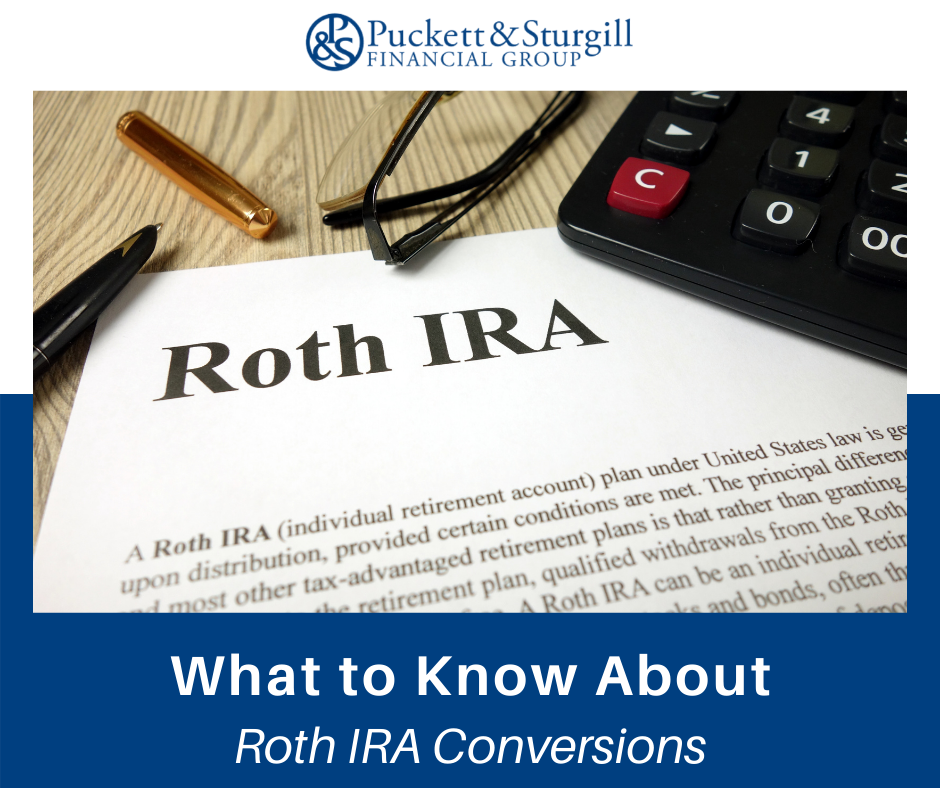
What to Know About Roth IRA Conversions

A Roth IRA is a retirement savings vehicle like no other. Not only can account holders withdraw their contributions at any time without taxes or penalties, but also these accounts aren’t subject to required minimum distributions (RMDs)—and all earnings are tax-free.[1] Investors who feel they are too heavily steeped in pre-tax retirement contributions may decide to convert some traditional IRA contributions into a Roth, repaying any tax credits received for the contributions while allowing future gains to grow tax-free.[2] However, the Roth conversion process can sometimes be complex, and a misstep can cost you money in taxes, fees, and penalties. How does a Roth conversion work, and what should you know before getting started? What is a Roth IRA Conversion? A Roth conversion involves transferring pre-tax or tax-deferred retirement assets (from a traditional, SIMPLE, or SEP IRA) into a Roth IRA. This creates a taxable event, which means that you will likely owe taxes on the amount converted in the year of conversion—but after that, these contributions are treated as though they had originally been put into a Roth in the first place. You also shouldn’t owe any early withdrawal penalties, as the conversion simply moves these assets from one retirement account to another. When you reach retirement age, you can withdraw any earnings and contributions without paying a dime of tax. How are Roth Conversions Executed? The IRS has described three different ways to convert a traditional IRA to a Roth.1 A rollover allows you to take a distribution from your traditional IRA—usually by check or online transfer—and move that money into your Roth within the next 60 days. A trustee-to-trustee transfer requires you to instruct the financial institution that holds

Read More »

Contribute to an IRA Before the May 17th Deadline

Taxpayers of all ages may be able to claim a deduction on their 2020 tax return for contributions made to their Individual Retirement Account made through May 17, 2021 (the U.S. Department of the Treasury is delaying the April 15th deadline to file and pay taxes until May 17th, giving individuals and businesses another month to file and then pay the government what they owe). And unlike in past years, there is no longer a maximum age for making IRA contributions. Contributions to a traditional IRA are usually tax deductible, while distributions are generally taxable. There is still time to make contributions that count for a 2020 tax return, so long as the contributions are made by May 17, 2021. The good news is that taxpayers can file their return claiming a traditional IRA contribution before the contribution is actually made, but the contribution must then be made by the May due date of the return. While contributions to a Roth IRA are not tax deductible, qualified distributions are tax-free. In addition, low- and moderate-income taxpayers making these contributions may also qualify for the Saver’s Credit. Contribution Limits from the IRS Generally, eligible taxpayers can contribute up to $6,000 to an IRA for 2020. For someone who was 50 years of age or older at the end of 2020, the limit is increased to $7,000. The restrictions on taxpayers age 70 1/2 or older to make contributions to their IRA were removed in 2020. Qualified contributions to one or more traditional IRAs are deductible up to the contribution limit or 100% of the taxpayer’s compensation, whichever is less. For 2020, if a taxpayer is covered by a workplace retirement plan, the

Read More »

Retirement Income Planning

For investors approaching retirement, it is important to begin thinking about retirement income planning. This involves a mindset shift from accumulating an investment portfolio designed for growth to creating a portfolio of retirement income designed to help you pursue your lifestyle goals.[i] There is not a one-size-fits-all formula when it comes to determining how much income you will need in your retirement years, although most financial professionals agree that it is not necessary to replace 100 percent of working income.[ii] To determine retirement income needs and develop strategies for creating income streams, pre-retirees should consider the following factors: Goals. Identify what you want to get out of retirement. If you want to travel the world or pay for grandchildren’s college educations, your income needs will differ from someone who wants to simplify their life in retirement and focus on hobbies at home. Income sources. Anticipate your sources of retirement income, such as Social Security, pension, fixed annuities, and non-guaranteed income from investments. Carefully evaluate your options for when to begin claiming Social Security. For some people, it makes financial sense to claim benefits as early as possible; for others, it’s beneficial to defer benefit payments. Expenses. Estimate your fixed expenses and discretionary expenditures. Your retirement income plan should also address your anticipated needs for health care and long-term care in the future. For many retirees, health care is one of the most significant expenses they need to budget for.[iii] Consider also the potential impact of future inflation on your buying power. Market volatility. Depending on your risk tolerance and goals, your plan may be more focused on investing for potential gains during retirement, investing for both growth and income, or taking a more conservative approach using

Read More »